How to Replace the Front Motor Mount on a Mercury Villager

How to Replace the Front Motor Mount on a Mercury Villager

Motor mount failures seem to be a common problem for Mercury Villager vans. The same vehicle is also sold as the Nissan Quest.

The front mount is the most common one to fail. This mount takes most of the load when starting off from a stop. Repeated failures have been reported by some. Make sure you buy a replacement part that is form a quality manufacturer and has a lifetime warranty.

Raise the vehicle and support it safely. Remove the plastic splash guard by removing the fasteners that have 10mm heads. They also have Phillips screwdriver slots but will likely be too tight to easily remove with a screw driver.

Remove the oil filter. Support the engine using a jack under the oil pan. Raise it to the approximate position it will be in once the new mount is in place. It will likely have dropped down some if the front mount has failed.

Remove the two bolts that hold the mount to the cradle under the engine. Next, remove the bolt that goes through the center of the motor mount. Keep track of where each of the bolts came from. They all have 17mm heads but are different lengths.

Tilt the mount forward and then twist it out. If it will not tilt forward, raise the engine a bit more to make room. You may have to unclip the wiring harness that is fastened to the cross member to make room, but I was able to get it out with it in place.

Pull the mount out through the opening created by removing the oil filter. Insert the new mount through the same opening and tilt it back in to place.

Replace the center bolt through the bushing first. Put the nut on but do not tighten it all the way. Align the other two holes by raising or lowering the engine on the jack. Replace the two bolts through the cradle and tighten them down. Now finish tightening the center bolt in the bushing.

Clean the mounting surface of the oil filter and replace the oil filter. Replace the plastic cover. Lower the van and test it out. Check for leaks at the oil filter.
[phpbay]mercury villager nissan quest, 10[/phpbay]

How to change a Power Steering Hose on a Jeep Cherokee

power steering hose

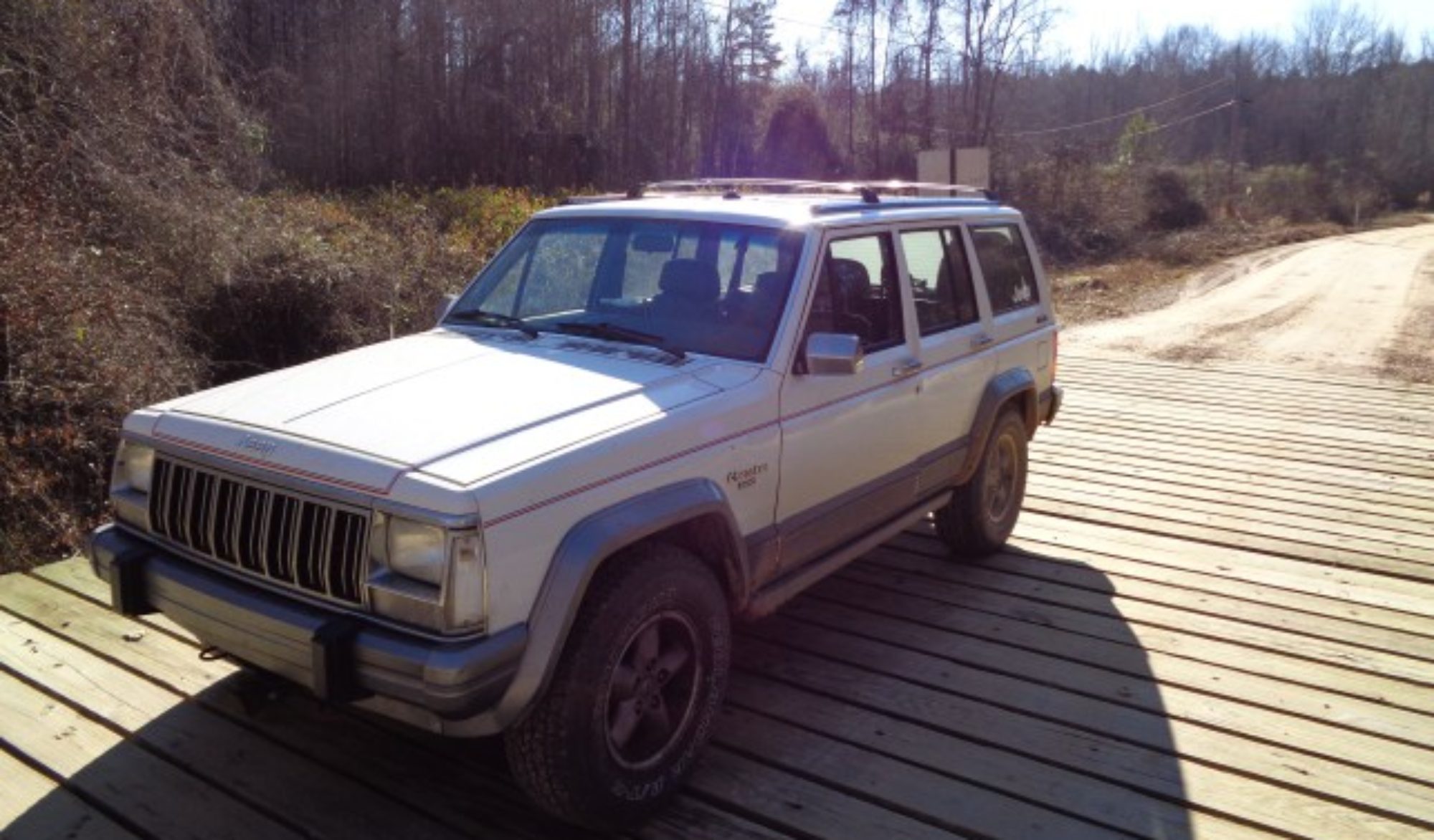
My son’s Jeep was leaving oil stains in the driveway and making a howling noise when he turned the steering wheel. I popped the hood and had him turn the wheel. Sure enough, fluid was seeping through the hose when it was under pressure. There did not seem to be a definite hole, the rubber had just become porous with age.

Before I began, I coated my hands with Market America Clear Shield to protect me form the power steering fluid.

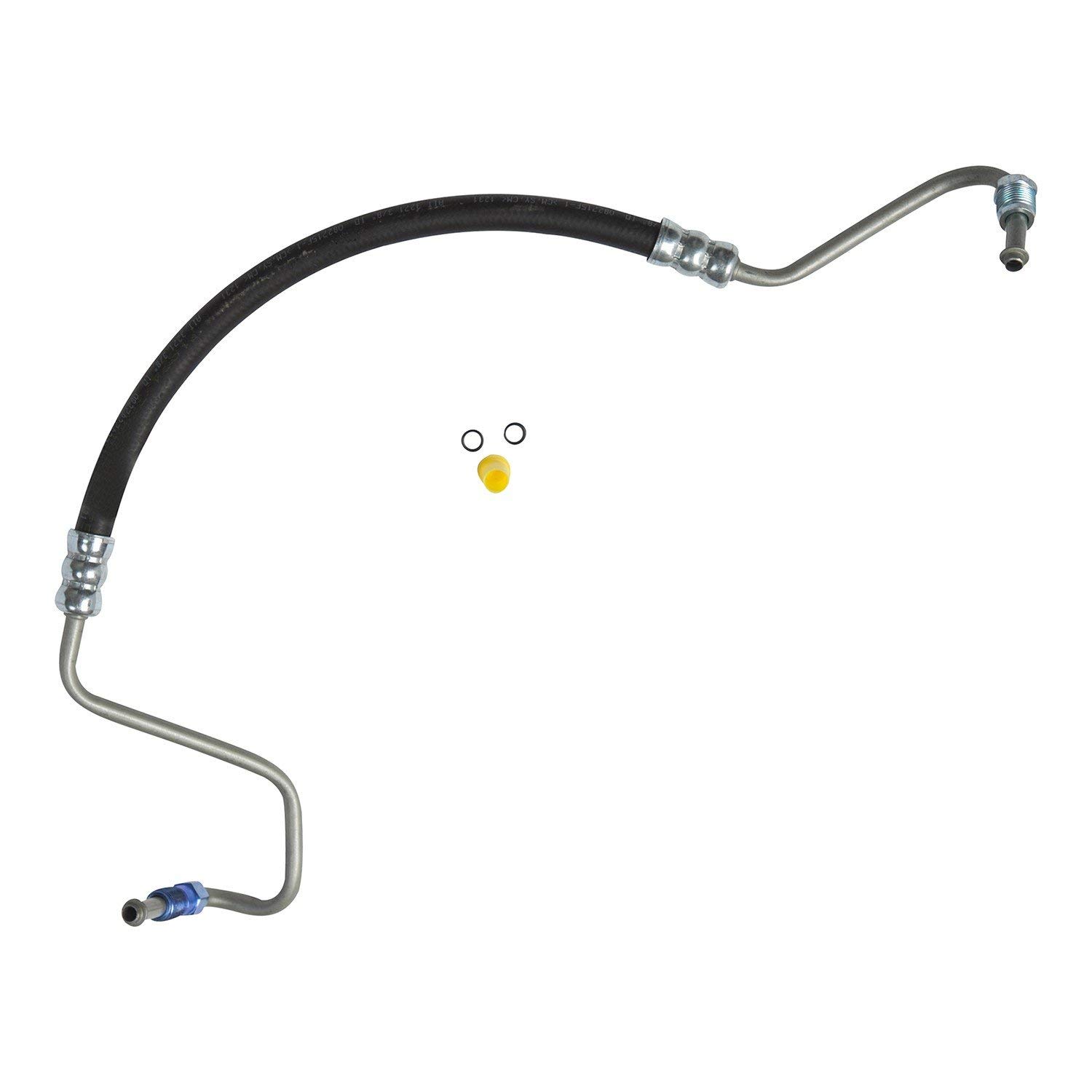
I began by obtaining a replacement hose. I could have had a new section of hose put on the old fittings at a hydraulic shop. However, it looked like one of the metal ends was kinked by a previous owner so I elected to replace the entire assembly. I bought one from a chain auto parts store so that he could easily swap it out if there was a warranty issue.

Since the hose had been leaking for a while, the area was very oily. I coated my hands in Market America Clear Shield to prevent oil stains on my skin.

First I removed the air filter box since the steering box is located below it. Next, using a 5/8 inch wrench (because I don’t own a full length 16MM open end,) I loosened the fitting at the pump.

The fitting at the steering box is 18 MM. It is very difficult to get to even with the air box out. Before removing it, make sure you remember how the hose is routed. Take a picture or make a drawing to make sure it goes back the right way. It may look like you have to remove the return line to remove the pressure line but you don’t. There is enough room to pull it out if you twist it correctly.

Next I installed new O rings on the new line. I was careful not to nick them as I used my fingers to slip them in place.

I installed the steering box end first but left it slightly loose so I could rotate the hose to the proper position to make the pump connection line up. I was very careful to not cross thread the lines when screwing them in place.

Next I installed the pump fitting. I held the line in the proper relationship as I made the final turn on the nut. I could feel the O ring seat. Then, I turned the box end the last turn and locked it down in place as well.

I filled the reservoir with the correct fluid. I then started the engine and turned the wheels from lock to lock a few times until I heard all the air purge out of the system. I then checked for leaks at the fittings and the crimps on the new hose.

I reinstalled the air box and replaced the various vacuum lines that had been knocked loose by moving the air box around. I am glad I caught it before the pump was damaged from running it low on fluid.

Beck Arnley Power Steering Pressure Hose

[phpbay]jeep power steering, 10[/phpbay]

Tybee Island Lighthouse Museum

Tybee Island Lighthouse Museum

For my parents 50th anniversary, we made a family trip to Savanna, Georgia and Tybee Island. While there, we toured the Tybee Island Lighthouse Museum.

The drive along Hwy 80 provides and interesting view of the narrow channels and grassy marshes that make up the area. At times, the road was very busy and always windy. We enjoyed looking at the boats of all sizes and the long wooden walkways to the private docks on the canals.

The Tybee Lighthouse has 178 steps that we climbed to take in the view from the top. This is still a functional lighthouse, although the electric light bulb means that constant maintenance is no longer needed. The light house keeper’s homes are now on display.

The entrance is through the gift shop where you may be greeted by one of the two Tybee Island Light House cats. There is a white one named Michael and a yellow one named Miss Kitty. Michael just lay there and yawned at us. Miss Kitty wanted to be petted. The signs there warn that the cats do not always want to be petted however and that visitors should use caution when approaching the cats.

The 178 lighthouse steps are steep and the circular nature makes it hard to pass people who are climbing in the opposite direction. It seemed best to wait on one of the landings to pass. The view from each landing provides a different perspective as you climb so they are good places to stop anyway.

The view from the top was well worth the effort to get there. There is a narrow platform that goes around the top of the lighthouse where you can get a view of the surrounding area. You can see the beach and the shipping channel that the light house marks. You can also look out across the island and see the homes and condominiums that make up the north end of the island.

After climbing the light house, we toured the former keeper’s home. Before 1933, the light house had an oil lamp that had to be refueled often. This meant the keepers had to be onsite to constantly climb the stairs and keep the oil light burning. The renovated homes on the site are where these people used to live.

One of the homes is now a movie theater and the other has been restored to see what life might have been like for the keeper and his family. The home is furnished in period fixtures and decorated with old toys and curios that might have been found there.

The distinctive black and white stripes of the Tybee Island Light house were first put there in 1916. The black at the top helps the light house be visible in the day time from the sea. In 1965 they changed the paint scheme but it was restored in 1999 to the 1916 pattern that has become the Tybee Island Lighthouse we are familiar with.

The light house is closed on Tuesdays but open other days of the week. It cost $7 to tour. There are various discounts available. Parking is ample and free in the Museum parking lot. You can also park across the street in the beach parking area but you have to pay the parking meters there.

The ticket price also includes the Battery Museum across the street. I seemed to be the only one in my family that expected to see batteries in the Battery Museum. It is actually an old fort designed to protect the island and the river from enemy attack. I don’t think it was ever used for that as most attackers simply went somewhere else to enter Georgia.

Inside the battery however are several interesting old photos of Tybee Island or Savanna Shores as it was know previously. In the 1920’s and earlier Tybee was a playground for people looking to escape. Before Hwy 80, there was a train track to the island playground. There were huge resorts, dance clubs and carnival type places on the island. Not much remains of the former glory days on the island now.

After our tour of the museum, we hit the beach right behind the Battery museum. For lunch, we noticed the local Shriner’s Lodge was selling hot dogs. So, we ate hot dogs and chips on the back bumper of our Suburban while every one changed into their swim clothes.

The beach is accessed by a wooden walkway across the marsh grass. The sand is nice and wide with plenty of space even on the busy Forth of July Weekend when we visited.

For more information about the Tybee Island Lighthouse Museum see: http://www.tybeelighthouse.org/
Tybee Lighthouse Marker
Tybee LightHouse
Keepr's House
Kids on the Beach
Strawbridge 2010
Michael the Tybee Lighthouse cat
Top of the Lighthouse
Winding stairs
Miss Kitty the Tybee Lighthouse cat
Old toys in the Light House Keepers home
Lighthouse from the Battery
Carousel horse in the Battery Museum

Removable Doors for Jeep Cherokee

Making Jeep Cherokee Doors Removable

Removing the doors on a Jeep Cherokee not only add to the open air feel of the Jeep Cherokee of road but it also greatly increases the visibility. Making the doors easily removable and replaceable can be accomplished by modifying the door hinges. Because this modification reduces the strength of the door hinge in a crash, it should only be done on off road vehicles.

At least a few hours before you begin, remove the inner door panels and spray penetrating oil on the bolt threads inside the door. This will help get them loose with the torx bit and reduce the chance of stripping a bolt head.

Remove the speaker from the door and disconnect the wire. If you have any other electrics in the door also disconnect the wires to these.

Remove door speaker and wire

Remove the rubber tube that covers the wires. Remove the pin from the limiting strap on the door. You may want to remove the limiting strap entirely from the door or just push it in out of the way.

There are six bolts that hold the door to the hinge. They have a T40 torx head. They are often very tight and you will need a quality torx bit to get the out. I have twisted quite a few bits removing door bolts.

T 40 Torx

The outer single bolt on each hinge is accessed with the door open. The other two bolts will require either a very short torx bit or you can access them from inside the fender well if the fender liner is removed and the door is closed. There are two holes in the hinge for this purpose. (Thanks to Brian Klotz for teaching me this trick.)

Door hinge bolts

Access outer bolts from inside the fender.

Support the door and remove the bolts. Take care to keep the shims and backing plates in order so they can be put back in the proper places. Set the door aside in a safe place.

Now, use a grinder and a cut off wheel to cut off the lower ear of the hinge. Knock it off the pin with a hammer. I use a heavy open end wrench to distribute the blow to both sides of the pin. If you can’t drive it the entire way off, knock it down enough to get a cut off wheel in the slot and cut the pin.

Cut hinge

Knock off the lower part

Jeep Cherokee door hinge removal

Discard the lower part of the hinge. Pull the upper part of the hinge off. If, the lower pin came out intact, cut it to the length of the hinge so that it no longer sticks out the bottom. If you had to cut it to get it out it is already cut at the right place. Cut the upper pin at an angle so that it is shorter than the lower one. Make it about an inch long.

Modified upper hinge

The backing plate has a flange on the bottom that will interfere with putting the doors back on. To make it easier, cut the flange off of the bottom just below the pin. Make about a one inch wide opening.

Modified backing plate

Put the backing plates and shims back in their original positions and bolt the hinges back where they came from. Use the paint marks to help line it back up in its original position. If you have trouble putting the door back on, move the hinge toward the outside to give more maneuvering room. Use a ¼ inch drill to open up the hinge holes to allow them to slip in and out easily.

Reinstalled hinge

To make hooking up the wires easier you can add quick disconnect plugs to the lines. Reinstall the speakers and inner door panels.


Free Shipping

To put the door back on, hold the door from the inside so you can see the hinges. Drop in part of the longer lower pin. Then maneuver the upper pin in place. Be careful because the door is heavy.

Putting door back on

Make sure the door opens and closes properly. If not, adjust the hinge mounting as necessary.

Enjoy the open air feel. Enjoy being able to see where your tires are. Be careful of the limbs and mud in your face!

See my earlier article on Jeep Cherokee door removal here.

Note that the dome light fuse may have to be pulled and the door chime removed as the striker will not be depressed with the door removed.
[phpbay]jeep cherokee door, 10[/phpbay]