Posts Tagged ‘jeep cherokee’

Upgrading the 8.25 differential cover on a Jeep

Thursday, May 10th, 2012

Shopping around for a rough & tough differential cover for the Chrysler 8.25 differential can be a challenge. Try searching on Ebay and chances are you are only going to find the OEM covers or very expensive covers. If you or someone you know welds, consider purchasing a DIY kit from Blue Torch Fabworks located in the Birmingham, Alabama area. They have great shipping prices and were very fast to ship it out.

If you just want one already made then consider purchasing their differential cover ready to go for about twice the price of the DIY. Their prices are very competitive with just about anything else you would find in a catalog or even on Ebay. Not sure about Blue Torch Fabworks? Look them up on Facebook and they will answer your questions or you can view their pictures to see what great items they offer.

The Reliability of the Jeep Cherokee

Friday, April 20th, 2012

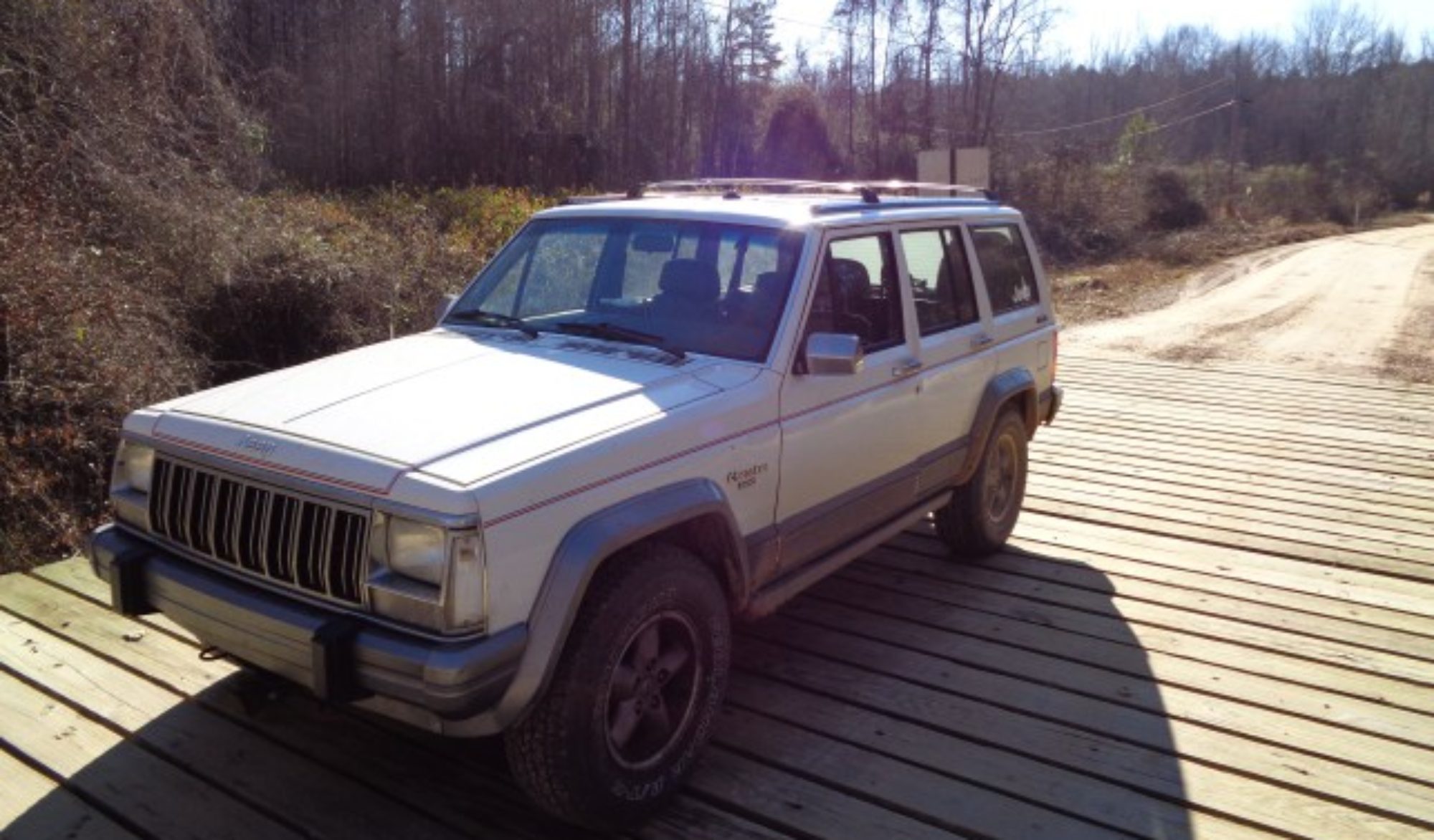
With every automobile there are going to be variable opinions about reliability. For instance, my grandfather owns a Cadillac Catera and has had it since it was brand new. Try going to the dealership to find parts and they are either no longer available or it is going to take nearly a month to get what you need. Countless times the salesman have attempted to convince him to trade the car in and have literally told him it is just a piece of junk. That is not how grandpa sees it though. Having driven the car I can say when it does run it rides well. I can remember after I bought my Jeep Cherokee that my grandfather asked me a ton of questions and actually questioned why I wanted an “old” vehicle and why I wanted to go offroading. He insinuated I was spending a lot of money, which if you wrote everything down I had done whether it be upgrades or maintenance/repairs, wouldn’t come close to what he has spent fixing his Catera. Plain and simple,  it is just not reliable like my Jeep Cherokee.

My Jeep may be over 20 years old and some will see it as ready to go to the scrap yard (which infuriates me). A few dents here and there doesn’t make it a bad vehicle. What does is under the hood and the drivetrain if you have had to constantly make repairs. I so want to ask people how many times their automobile has left them stranded, been repaired by them and how many miles they actually have on theirs? Now I will give credit to my Toyota friends that their automobiles do just as good as my Cherokee. I am amazed at some of the mileage stories I have heard from long time Toyota owners.

If you are a Jalopnik.com reader you may have recently come across an article about the top ten best used cars to buy with your tax refund. In case you haven’t though, their #4 pick is the Jeep Cherokee: http://jalopnik.com/5902578/the-ten-best-used-cars-to-buy-with-your-tax-refund/gallery/8 .

I used to think that a car with over 100K miles was getting worn out. Not with a Jeep Cherokee and according to my Jeep friends, that is barely breaking it in. My boyfriends Cherokee has 350K miles on it with original parts; mine has around 220K miles on it though I have changed out the engine and transmission.

The original owner of my Cherokee didn’t take care of her very well so when I brought her home I discovered a cracked head. That’s no biggie since I went to Pull-A-Part junk yard in Atlanta to get another one. Six months later I purchased a Grand Cherokee from my uncle just for the engine he had spent lots of money on overhauling. The only reason why I changed out my transmission was because of my rough off roading skills. I apparently had crimped the lines together. Looking at the prices for new lines I realized I could just buy another used transmission. I ended up getting one for free from an XJ friend though which was even better.
So I have had to replace a radiator a time or two (due to manufacturer defects), a battery that cracked, a water pump and a throttle position sensor. Those are all normal maintenance repairs that happen in the life of an automobile. The times that I have been stranded on the side of the road are because of operator error, mostly running out of gas thinking I could go just a little further down the road to a cheaper gas station. Once was a new radiator that split at the tank which was plastic (sigh).

In the five years that I have owned my Cherokee I have driven it a lot. One year I decided to make a spur of the moment trip to Texas for Thanksgiving with two of my kids in tow. While my mom was in a panic because my Jeep was “old” in her eyes, I was confident I would get there and back, 1,800 miles later. I have driven it to Harlan, Kentucky which is a four hour drive one way at least once a year and sometimes twice. I lived in Cookeville, Tennessee about 100 miles one way from my hometown at least twice a month for a year. I just about drive my Cherokee everyday taking my kids to school and running errands.

Before I owned the Jeep, I had a 2000 Mazda MPV mini van. It was fancy with the leather seats, sun roof and video player, but I wasn’t happy with it. I liked it because it had room for my kids and their stuff I had to tag along when they were babies and toddlers, but it wasn’t me. I made the decision I wanted a vehicle I could easily find parts for, do a lot of the repairs on my own and was known to be reliable. After talking with my best friend I learned the Jeep Cherokee fit all three categories. I remembered my step dad owned a Cherokee and loved it. He drove it until it fell apart and it had close to 300K miles on it when he sold it.

Out of the nine automobiles I have ever owned which includes two Hondas and Mazdas, Chevrolet and Fords, the Jeep Cherokee has been the best and most reliable of them all. It is the one and only vehicle I have ever been happy with. Ask my three kids what their favorite vehicle has been and they will tell you the Jeep.


Jeep Cherokee Power Steering Hose Replacement

Tuesday, January 3rd, 2012

Jeep Cherokee Power Steering Hose Replacement

I have replaced several power steering hoses on various Jeep Cherokees. It has gotten to be a pretty straight forward job. See this previous post on how to replace a power steering hose.

Janice’s 1999 Cherokee had been emitting a puff of smoke each time she turned her XJ to full lock. Although there was little sign of a leak on the hose, our experience with the Green Jeep catching fire due to a power steering hose leak made me extra cautious.

I got a new hose and then pulled the electric fan and the air box to make room. I tried using the various 18mm wrenches I had to get the hose loose from the steering box. I have always been successful in the past using an open end wrench. However, this one refused to budge.

I picked up a set of crow foot flare nut wrenches from my local NAPA store. They have a great set of tools in a nice case for around $20. Unfortunately I forgot that the bottom is an 18mm and the top is a 5/8 inch. I bought only the SAE set. The store was closed for the holiday by the time I figured out I also need the metric set.

Jennifer rescued me by searching until she found a set at O’Reilly’s. It is still a nice set for about the same price as the NAPA set but does not have the nice case.

I used the 18 metric crow foot flare nut wrench to break loose the lower line. It took a lot of torque but it eventually broke free. Janice and Jennifer were able to finish taking it out using the 18mm stubby wrench.

I used the 5/8 crow foot to pop loose the upper hose. It was not nearly as tight. I showed them how to put on the O rings on each end of the hose and let them get the lines threaded into place. The lower one always seems to be difficult and takes some patience to get it started.

After the new line was installed, I had them add some fluid and jack up the front of the Jeep. They turned the wheel from lock to lock to bleed the air out of the line. After that, they started the engine and repeated the process.

Once most of the air was out, she turned the wheel to one of the locks and listened for the pressure relief to open. There was a noticeable change in sound as the last of the air purged.

I rechecked the level of fluid in the power steering reservoir and checked for leaks again. Now we all feel much safer driving the Jeep.


Powercraft Power Steering Pressure Hose – 80290

Powercraft Power Steering Pressure Hose - 80290

Replacing the Idler Pulley on a Jeep Cherokee

Thursday, November 3rd, 2011

Replacing the Idler Pulley on a Jeep Cherokee

If you get a strange chirping sound from the front of the engine in your Jeep Cherokee it is likely the idler pulley. These have a replaceable bearing but it generally easier to just buy the whole pulley with a new bearing installed.

To change the pulley, you will first have to loosen the serpentine belt. The belt is adjusted at the power steering pump. On most vintages, the power steering pump moves to adjust the belt. On the later vintages, there is an adjuster beside the power steering pump. Removing the air box makes access easier.

With the belt loose, remove the bolt in the center of the pulley. Most have a 15mm hex. Slip the pulley off and remove the sleeve from the center. In most cases you will reuse the sleeve.

If the pulley comes with a new sleeve, use it instead of the old one. Otherwise put the old sleeve in the new pulley. Bolt it back to the engine.

Reinstall the belt and tighten it up. I found the tension is about right when the belt will only twist 90 degrees between the power steering pulley and the water pump. It has to be pretty tight or it will slip when the AC is on.

Dayco No Slack Idler/Tensioner Pulley - 89097

Curing a soft brake pedal on a Jeep Cherokee

Monday, October 31st, 2011

Curing a soft brake pedal on a Jeep Cherokee

A soft brake pedal on a Jeep Cherokee can be very unnerving. The brakes are not exceptionally great on a Jeep Cherokee to begin with so when they are not working well, they can be downright scary.

The first place to look on a Cherokee is the adjustment of the rear drum brakes. If the shoes not adjusted right, then the pedal travel required to take up the slack will be enough to make the pedal feel soft.

To adjust the shoes, remove the rubber plug in the backing plate. Use a screwdriver or better yet a brake spoon to turn the spiked wheel. Turn it down to tighten the shoes. I usually tighten them until there is noticeable drag when turning the tire.

If the adjuster does not click when you turn the wheel, then the auto adjuster is likely not installed correctly. I see this problem often. The auto adjuster is operated by a cable the moves the adjuster wheel when the brakes are applied in reverse. The cable is routed over a small metal pivot point. Often the metal piece is not installed correctly under the spring and will allow slack in the cable. To fix, simply remove the spring and reposition the pivot plate in the hole and reinstall the spring. Just make sure the plate stays in place as you reattach the spring. That is the tricky part.

Also, if exposed to road salt, the adjuster screw may seize. Free it up with a rust dissolving oil like PB blaster or ATF. Coat it with grease when re installing to help prevent it seizing.

If the rear brakes are adjusted properly ands the pedal is still soft, you may have air in the lines or a leak. Check the rear wheel cylinders for evidence of leaks. Look for traces of fluid inside the brake drum. In the front, look for fluid around the calipers.

If you still have a soft pedal then you will need to bleed the brake system to purge any air. Air can get in if the master cylinder has ever run dry or if a brake line has been removed for any reason.

I prefer to use a pressure bleed system to bleed the brakes. I find it gets air out faster and I can do it without an assistant. I don’t like using vacuum bleeders because I have found that they can pull air in past aging wheel cylinder seals. If the seal are new this wont be a problem but old ones can allow in air during a vacuum bleed even if they don’t leak fluid out. The old “pump and bleed” method works if you have an assistant but is slower than a pressure bleed.

One last are to look at if you continue to have a soft pedal after checking all of the above is the front brake calipers themselves. Some Jeep calipers use a phenolic piston. The plastic in the piston can break down with heat and start to crumble. If the piston is breaking it may flake off a little each time the pedal is mashed.

Often the brake pedal firmness fades slowly and you get accustomed to it. Once a firm pedal is restored, you may be surprised at how well your Jeep stops and how easy the brakes are to modulate.