How to replace the track bar on a Jeep Cherokee

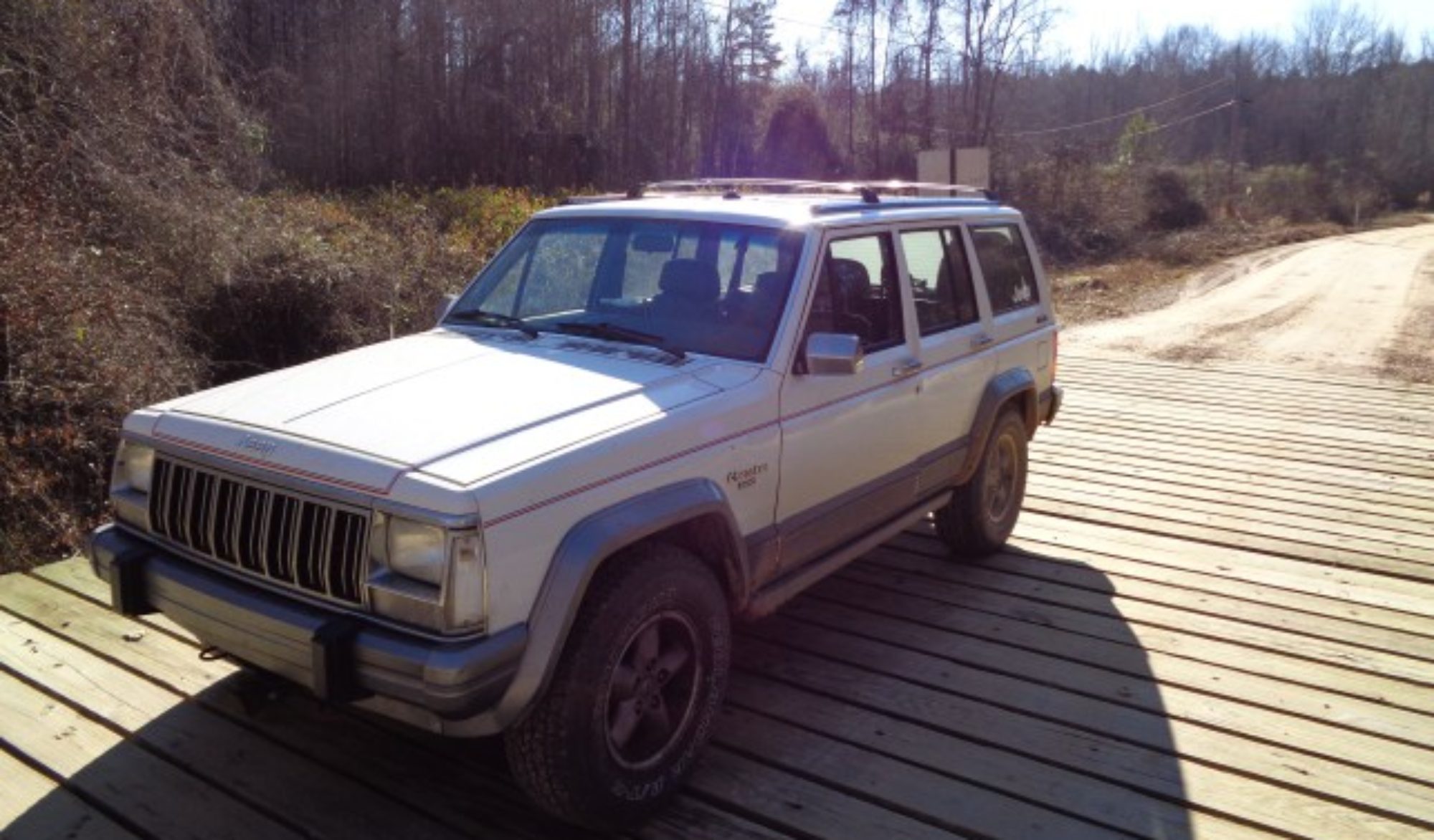
How to Change the track bar on a Jeep Cherokee

The track bar locates the front axle side to side on a Jeep Cherokee. The stock bar consists of a rubber bushing at the axle end and a tie rod end at the frame joint. The frame end joint generally wears out first.

To determine if the track bar is bad, hold your hand on the frame end joint while an assistant turns the steering wheel back and forth. Any movement here means the bar is bad.

To replace the bar begin with the vehicle weight still on the axle. Locate the steering so that the 15mm head bolt that fastens the track bar to the axle is accessible. Remove the bolt. There is a special nut with a tab on it behind the axle. Pull it out after the bolt is free.

Now lift the vehicle to a comfortable working height. Remove the cotter key from the mounting bolt. Use a ¾ inch box end wrench to loosen the nut. Do not remove it completely at this time. Run it up even with the top of the bolt.

Use a tie rod end removal tool to press the tapered link out of the frame mount. My favorite is the pesto tie rod puller from JC Whitney    ( Since that tool is no longer available try this one from Amazon) that accesses the joint from the side. Hammer the puller between the bar and the mount. This will likely damage the rubber boot. Put a moderate amount of pressure on the puller by tightening the bolt on the puller.

Then use a hammer to hit the frame bracket. Hit it hard. The idea is to temporarily deform the tapered hole enough to loosen its grip on the pin. When the bar pops loose, the puller will likely fall so watch your toes.

Remove the nut the rest of the way and remove the bar. Clean the tapered hole.

On the new bar, note the location of the cotter pin hole. Be sure it is rotated in a way that will allow you to put in a new pin once it is installed in the cavity.

Slip the tapered pin into the hole. Tighten the nut. Align one of the castle nut opening s with the hole in the pin. Insert a new cotter key and bend it back over the top of the pin.

Lower the Jeep to put weight back on the axle. Fit the axle end of the bar in the bracket and align the hole. The easiest way to align the hole is to have an assistant turn the steering wheel while you line up the bolt with the hole. Alternately you can push or pull the Jeep side to side to line up the holes.

Slip the bolt in and hold the special nut up behind it and carefully start the threads. Run the bolt in but do not tighten it fully. Bounce the Jeep a few times to settle the bushing in place. Then tighten the bolt.

Grease the frame end joint if it is fitted with a grease fitting.


Tie rod removal tool

Jeep 4.0 Oil filter adapter leak

Jeep 4.0 Oil filter adapter leak

Jeep Cherokees and other Jeeps that use the 4.0 are subject to a leak on the side of the block where the oil filter adapter attaches. There are three O rings inside that with age will leak.

Often this leak is misdiagnosed as a rear main leak or even a valve cover gasket leak. When the oil filter adapter leaks oil is blown back and collects on the rear of the engine.

The proper O rings are available in a kit from your local Jeep dealer or form a Crown Automotive distributor. Standard O rings do not seem to fit, so you need to get the proper rings from the kit.

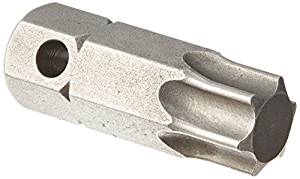
There are two different types of oil filter adapters used throughout the run of 4.0 blocks. One has a 5/8 hex on the surface. The later version has a T60 torx in the end.

Removal of the older hex version is pretty straightforward. Just turn the hex with a wrench and remove the adapter.

Removal of the later Torx version is more difficult in that there is not enough room to put a normal torx bit in the opening and still be able to put a racket on it. One method to gain clearance is to remove one of the bolts that hold the engine mount to the body. Getting this bolt head out of he way will give just enough clearance to put a 3/8 ratchet or breaker bar on the torx bit. As the center unscrews, you will run out of room before the part is all the way out.

One way to deal with the lack of clearance is to use a torx bit that can be fit in a box end wrench. Or you can make a special tool for the job by welding the torx bit into a box end wrench.

When the O rings are hardened, it takes a lot of torque to break it loose initially and there is a lot of friction all the way out until it comes loose. If you make a wrench, be sure to make it strong.

Once the adapter is off the block, you will need to remove the old O rings. If it was leaking, then they will likely be hard like bakelite. The big one often sticks to the bock. Scrape it loose or free it from the O ring groove depending on where it ends up.

The two on the center bolt are best removed using a dental pick. Coat the new ones in oil to slip them in place. Make sure they are seated in their grooves and not twisted when in place.

Set the adapter back up on the block. Align the roll pin with the groove in the adapter to ensure the proper clocking of the adapter.

Carefully start the center bolt into the bock and tighten securely. It does not have to be as tight as it was when it came off. It was stuck by the old O rings then.

Check the oil level, as you will likely have lost what was in the filter. Start the engine and check for leaks.

T60 bit can be turned with a wrench   https://amzn.to/2rrE454

Dick Cepek Crusher Tires on Jenny’s XJ Jeep Cherokee

Dick Cepek Crusher Tires on Jenny’s XJ Jeep Cherokee

In order to get a bit more off road capabilities, Jenny decided to go up a couple of tires sizes. She ordered a set of Dick Cepek Crusher tires from Tire Rack after reading many reviews and considering factors such as shipping time and customer service. To read more about her decision making process see her blog post at: http://thejeeptalks.blogspot.com/2010/11/dick-cepek-crusher-tires.html

The Dick Cepek tires have a very interesting tread pattern in a dog bone shape. The side lugs are in the shape of a skull and cross bones. The tread has a huge void area that makes for good traction in mud and rocks and self cleans quickly. The lugs are also siped for improved wet traction on pavement.

The tires arrived quickly from Tire Rack and were delivered by my friendly UPS driver who was kind enough to off load the very heavy tires in front of the shop door.

Mounting them on the rims with my manual tire changer proved to be a challenge due to the heavy sidewall construction. It was difficult to compress the tire enough to get it to slide into the drop groove on the rim. In fact, we got only three mounted before the concrete anchors that held the machine to the floor failed. I had a local tire shop do the last one and I noticed even his fancy pneumatic tire machine had a little trouble pushing on the last part of the bead.

While I was mounting the tires, Jenny worked on opening up her fender wells to accommodate all that rubber. The stock flares were removed and the flange was folded under to make a smooth surface in case the tires did contact the body work.

In the front, the bump stops were also extended an inch and a half with spacers mounted to the bottoms of the coil spring perches. The tires looked great mounted on her black Cragar steel wheels.

On the road the tires are surprisingly quiet. The road feel is fantastic and they are very smooth running. The tires required very small weights to balance which surprised me considering the total amount of rubber on them.

On the trail, they showed their value right away. She first aired them down to 15 psi. They did a fantastic job of getting her up the very muddy class III and IV trails in Harlan, Ky. The sidewalls still looked very stiff over rocks however so on day two she dropped the pressure more to 11 psi. I was pretty sure that as stiff as the sidewalls were there was little danger of them popping off the rim.

In the infamous Lower Rock Garden the tires did a fantastic job of gripping the rocks. The skull shaped side lugs that I had thought were mostly for show gripped rocks like glue. At one point the only thing holding her to a rock was the side lug and as she drove forward the tire went up the rock instead of slipping off. And this was in wet snowy conditions.

She was very happy to make her first successful run through the Lower Rock Garden. The new tires worked great.

Also on one very muddy climb where the only trucks that had made it up ahead of her were running Swampers, she made a quick mud slinging run and made it all the way to the top in one pass. The deep bone shaped lugs dug in and cleared out just as they were needed to make it up the twisty climb. I think she embarrassed some of the guys running BFG’s in that she made it look easy to climb the hill.

As we were leaving on Sunday, she aired them back up to 30 psi for the trip home. Even at interstate speeds, the tires ran smooth and quiet. The Dick Cepek Crusher tires proved to be very tough and versatile. They handled everything she threw at them: rocks, mud gravel and pavement with equal ability. Hopefully the tread life will be as great as the traction and she can enjoy them for a long time to come.

Dick Cepek Crusher Tire

Dick Cepek Crusher Tire

Dick Cepek Crusher Tire priced from $167.


End rattles and improve handling on Jeep Cherokee with Sway bar bushings

End rattles and improve handling on Jeep Cherokee with Sway bar bushings

The front sway bar performs a very important function on a street Cherokee. It controls the body roll to improve the handling. The later model Jeep Cherokees used a larger diameter bar to further improve on road handling.

The bracket was also modified to help keep the bushings in place during times of extreme articulation. The combination of a larger bar and a larger bracket means there is very little clearance between the bar and the bracket. The bushing is also smaller so it wears faster.

As the bushing wears, the bar can contact the bracket and make a rattling sound on rough roads. Replacement bushings are now available form Crown Automotive as well as the Jeep Dealer.

To replace the bushings, leave the vehicle supported by its axle. If a lift is used for access, the axle needs to be supported in the normal position to avoid having stress on the brackets.

Remove brackets one at a time. To remove the bracket, loosen the two 15mm bolts and slide the bracket off the bushing. Pull down slightly on the sway bar and slip the worn bushing of the bar. Slip the new bushing over the bar and slid it into the proper position. Slip the bracket back over the bar and bushing and reinsert the bolts. Be careful to properly engage the threads before tightening. Repeat the procedure with the other bracket.

The end link bushings may also need to be changed as well. The bushing that attaches to the axle usually does not wear out. However if it does the best way to change it is to replace the entire sway bar end link. It will come with a new bushing already pressed in place.

I like to replace the end link bushings with polyurethane instead of the original rubber. However the procedure is the same using either the stock rubber replacements or the poly upgrade.

Remove the top nuts on both ends of the sway bar. Remove both upper bushings. Raise the sway bar up off the end links. Remove the bottom bushings. Replace both lower bushings. Lower the bar back in place. Now install both upper bushings.

Replace both retaining washer and nuts. Tighten the nuts until the bushing just begins to compress.


Superlift – 10% Off Superlift Suspension Systems

When driving off road when more articulation is needed, disconnecting the front sway bar will greatly improve front traction and handling. To disconnect the front sway bar, remove the retaining nuts at the lower part of the end link where it joins the axle. This bolt has a torx head but is normally pressed into the axle so that it will not turn. Just remove the 18mm nut.

Slip the end links off the bolts and secure the sway bar in its upper most position with an elastic cord.

If you go off road often, you can make removal and reconnection faster by replacing the bolt with a ½” pin available at most farm supply sources. Drive the original bolt out of he axle connection and replace it with the pin. Then you will be able to quickly disconnect and replace the sway bar connection by simply removing a clip and pin rather than having to use a wrench.


Superlift – 10% Off Superlift Suspension Systems

Black Mountain Adventure

Black Mountain Off Road Adventure

The XJlist folks met once again for their Annual Fall Crawl at Black Mountain in Harlan Ky. The trails of Harlan County offer a wide variety of trails and fun. This year however a new varied element was added to the mix: changing weather.

The group began arriving Thursday morning coming from east west and south to meet at camp 3 half way up Black Mountain. Most traveled in rain all morning to reach the park where the skies were clear. But the morning rain had made the step gravel climb to the camp site very slick.

After paying for camping and buying a Harlan County Sticker, I asked the guy about the road. He assured me that it had been graded since I had been there in the spring and if I made it up then I should have no trouble. Note that he drives a Sentra.

I put the Suburban in Low Range and headed up the hill. I noticed a bit too late that it looked like someone had had a hard time getting up and had done a lot of spinning. I got on the throttle to build momentum but it was too little too late and I came to a stop with all four wheels spinning. Then I started moving backward.

I tapped the brakes and the trailer brakes helped hold it in place. However moving backward turned up not to be an option either as I started to slide toward the edge of the road where there is a huge drop off. I did however slide far enough tot the right for Jenny to squeeze past and hook a strop to the front. With a tug from her Jeep, I made it up just fine. I looked back and saw Neal’s Jeep parked on the side and realize that he must have made it to the same spot with similar results and unloaded his Jeep to make it up the hill.

Once at camp, we set up our tent and greeted our friends. The weather was quite warm and then suddenly a breeze popped up. Matt’s tent was set up but not staked. He looked up juts in time to watch it float over the edge of the cliff into the kudzu below. He managed to catch it before it got out of reach unlike a few years ago when he had to don his repelling gear and be winched down and back to get his tent from a similar incident.

After a leisurely time of unloading, airing down and disconnecting sway bars, we headed out to explore some new trails. We began with a new cut off form trail 45 called Pappy’s Bypass. It was a narrow muddy trail with lots of switchbacks and great views of the fall leaves in the valley below.

We reached White Tail camp and the weather shifted. It went from warm and clear to thunder and hail. We sought cover under the shelter and watched as the storm blew over quickly and then shifted to snow. As the snow died down we began to play on the rocks and hill climbs there.


After some play time we headed back along trail 15. This trail is fun when dry and very exciting when wet and slick. The very last section consists of a couple of very steep switchbacks where you just have to make a controlled slide down. Lots of fun to end the first day.

Back at camp Evan had arrived and started a fire. We sat around and caught up with our friends and cooked supper.

The next morning we saw snow on the upper parts of the mountain but none in our camp. We headed up to Middle Fork and considered a run up 15. Several of the group played on the first steep hill. Some made it and some did not. Knowing the second hill is the one that is really a challenge in the wet, we split into two groups – Swampers and other tires.

We met back up where 15 and 12 come together. Surprisingly we arrived at the rendezvous point at exactly the same time. We merged the groups back together and headed to ward the stadium area which has several hill climbs. Along the way Neal noticed a small rock garden so we went back and played on it and posed for photos on the hills there.

Matt noticed his cross member had come loose and his transfer case was dangling. We made a very temporary trail fix and left his Jeep there while we explored further down the trail.

The snow was really coming down at this point. Those of us with out doors were getting our seats soaked as Matt sat in my passenger seat and soaked his pants. Cold and wet we made out way to the Truck Challenge course and the soup bowl.

We quickly found a pile of rocks to play on and Josh and Evan gave a go at swimming in the soup bowl. I started to explore the area a bit when I heard a strange noise. The noise turned out to be my front drive shaft separating from the front yoke. One of the strap bolts had sheared off and I lost a cap in the process. I pulled the shaft and prepared to make my way back to camp in 2wd.

Back at camp, Matt started work on his cross member while I worked on extracting the broken bolt from the yoke. Once it was out, Wayne Sr gave me a spare bolt and a strap. Evan donated a U joint. I pressed in a new joint and waited for daylight to install the shaft.

Matt had no luck fixing his cross member so he elected to leave his Jeep at camp and ride shotgun. We built a huge fire and enjoyed telling stories well into the chilly night.

The next morning it was cold and clear with lots of snow visible o the mountain. The plan was to go back up the twisty trail 15 and then work our way back through the massive park on trail we have not run before.

Trail 15 took most of the morning as Mitch G got scarily sideways near the top and required a strap and assistance from Frosty’s Toyota to get pointed back up the hill.

Josh made a run and his Swampers pulled him up easily. So we staged him with a strap near the top to give a tug to those who needed it. Jenny made a run and had a huge mudslinging fun time making it look easy. I followed her up and made it without assistance as well.

Once we had all the Jeeps to the top, we headed on to White Tail for lunch. We ate lunch under spitting snow and then headed out for a trail ride. Neal and Evan headed to town for fuel while I lead the group toward trail 22. We had planned to run T.R.O.U.B.L.E. but when we got there it was covered in very slick leaves and it looked like no one had run it in a while. The consensus was that it would be more fun to go up than down so we elected to skip it for the time.

I lead the group on to 18 which has two fun climbs back to the main trail. The first had a big log on the side that was impossible to avoid in the slick conditions. I think Jenny’s bumper cap was the only casualty of the otherwise very fun climb. The second climb was fun as well with a big rock that scraped a few wheels as we climbed.

We all collected at the Lower rock garden and played there for a while. Jenny made good use of her new Crusher tires and crawled easily through the lower section while frosty and Josh ran the garden backwards toward her.

After getting our fill of the Rock Garden we headed off to let Jenny redeem herself on rail bed. Last time here, she slipped on the exit and had to be extracted.

This time Rail bed was even more intimidating. The rocks were wet and slick and most of the smaller ones and even some of the big ones had washed down the hill.

Near the three quarter mark of the trail, Mitch popped a tire off the bead and Neal drove backwards down the trail so his onboard air line would reach. After the tire repair, Neal positioned his Jeep to use the winch to help people over the nasty V notch made by two big rocks.

There are three exits to rail bed. One requires a lot of clearance to get over a huge boulder. The other is the one that Jenny slipped off of last time and is now even more narrow and dangerous. The only viable option for most of us was a steep muddy climb. We positioned a winch at the top and another Jeep with a strap to assist.

Jenny made it over the V notch fine and was almost up the muddy hill when she hung her diff on a rock and had to have a strap to help her get the rest of the way out. I got hung on the same rock and had to have a bit of a tug as well.

Once every one was up and out, we gathered some fire wood and made a dash back to camp. The sunset on the snow covered mountains made for a beautiful drive back to camp.

The crew made dinner in record time and we enjoyed our huge steaks and potato boats as darkness settled in. Me enjoyed looking up at the bright stars and enjoyed another evening of fellowship around the camp fire. For desert, we warmed up some apple and pumpkin turnovers that my mother made for the trip.

Sunday morning dawned crisp and cold and we all fought ice as we packed up our tents and gear. A heavy layer of frost covered out trailers and everything left outside. We took our time loading up and the remaining group made a final stop at the Harlan Huddle House before parting ways.

This trip was one of the most adventurous yet for me even if we did not conquer as many obstacles. The cold wet weather made simply driving the trails a challenge. Three days of sliding and sliding has defiantly given me a better feel for driving my Jeep and improved my confidence. Black Mountain Adventure area sure lived up to its name this trip!