The Power of Passion by Alan Hobson and Jamie Clarke – Book review

The Power of Passion by Alan Hobson and Jamie Clarke – Book review

I just finished reading The Power of Passion. This book is about the authors’ two attempts to climb Mount Everest.

I have never had much interest in mountain climbing myself. “Because it’s there” is as much a reason to avoid a place as it is to go there so Sir Hillary’s words don’t really inspire me much. For example, if there is a wasp nest or a copper head under a rock, “Because it’s there” is a very good reason to avoid the place.

A place that is freezing cold and does not have enough oxygen to support life is a place for me to avoid. However that does not at all diminish my admiration for those who have the passion for such adventure and have made the effort.

I was a bit disappointed by this book however due in part to its cover design. On the cover it describes the authors as “Everest Summiteers.” I was expecting a story about people who actually made it to the top of the mountain. A more accurate title would be “A History of a Campaign that Failed” although these writers in no other way compare to Mr. Twain.

The book describes two adventures to the mountain, the first where they lack experience and the second where they are under equipped. There is a note in the end of the book that tells us that the authors did eventually make it to the top, but this is not that story.

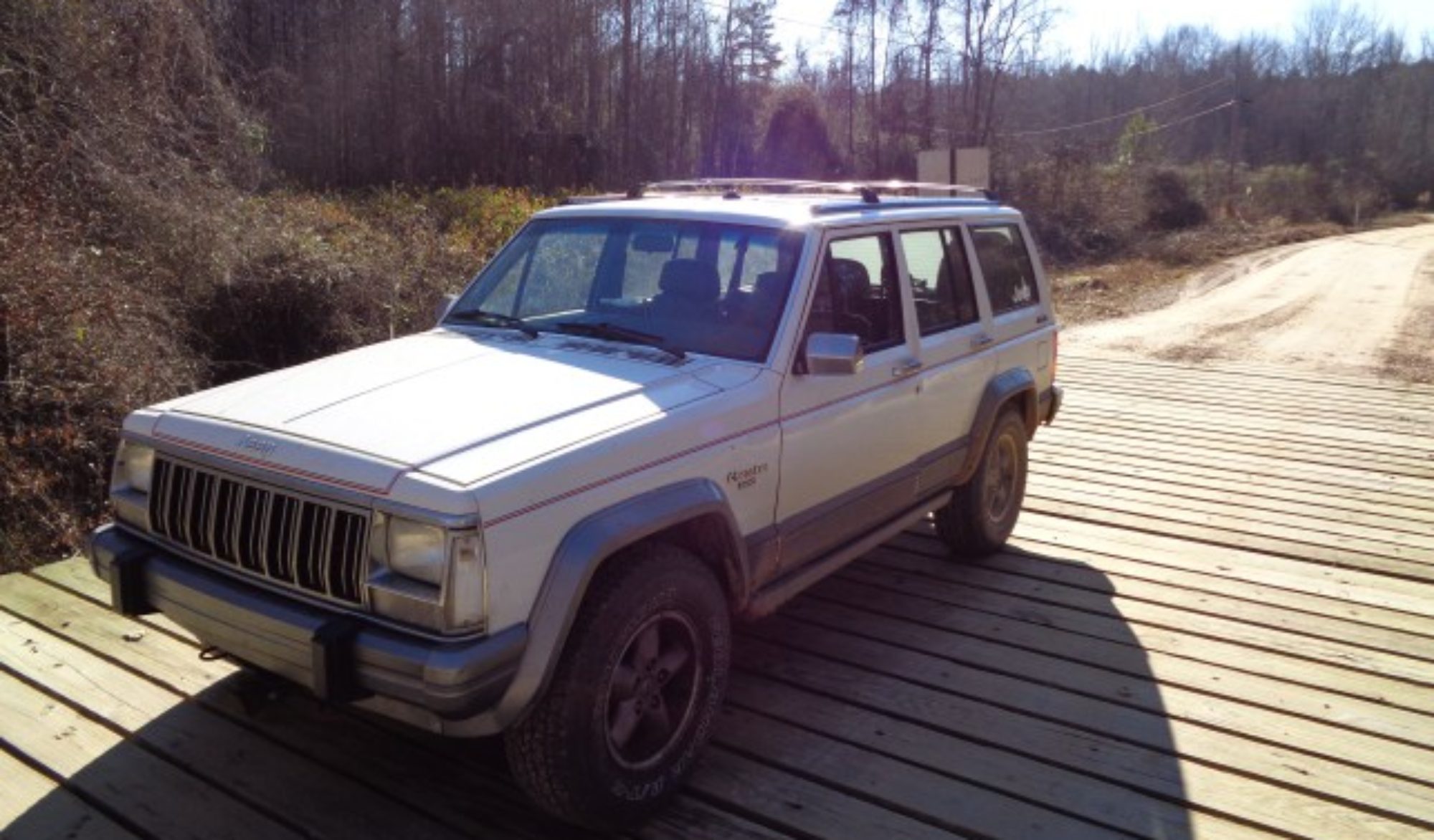
I had never even imagined what it is like to climb Mount Everest. I prefer to drive my Jeep to remote locations and maybe take a short hike to the look out. Just getting to the base of Mt Everest is an adventure as described it the book. Some of their “bad luck” might have been prevented by better planning but I can see how difficult it is to prepare for an adventure on the other side of the world in a remote setting like this.

I also found the title of the book to be misleading. I did not see much in the way of the power of passion being used to overcome any obstacles. I did see that the adventurers were determined to accomplish their goal, but I did not see any clear examples where passion was the obvious motivating factor. Stubbornness maybe, but not passion.

There is one scene in the story where a climber nearly dies and he is motivated to live through a satellite phone conversation with his young children. His passion for his family may be the underlying lesson but it is not really made clear in the story. The story seems to be more about people working together as a team to save a fellow climber even though they had decide before they left that they would not make such a sacrifice if faced with the choice.

I did learn one interesting fact about adventuring that made reading the book worthwhile. I learned how adventures such as these are financed. I had always imagined that the climbers were somehow independently wealthy playboys who had nothing else to do but go risk their lives on a mountain.

I had never grasped the concept of an adventure sponsor before. It turns out that the most difficult part of the journey for these guys was raising the money to go. The effort required to organize and finance the trip was so taxing on them that it sapped the energy they needed to actually make the climb. Having organized large events before, I can relate to the amount of effort that must be required to organize an expedition to Everest.

The dealing with sponsors must be incredibly nerve racking and mentally challenging. There is certainly some travel involved so it would be physically challenging as well. Also there would be the interruption on the physical training required for the trip.

I really enjoyed reading the stories of the challenges faced by the climbers and the stories of how they worked together to make sure every one got home alive even if they did not make their goal of reaching the summit. I can’t imagine the pain of coming that close to the goal and having to turn back. I am not sure I could have turned back. I might have been like so many other climbers and made my way to the top only to die on the descent.

I admire their courage and ability to make good decisions in the harshest conditions possible. They were exhausted, could not get enough oxygen and were freezing cold. The cold alone would do me in not even adding the other factors.

Overall, I enjoyed the book and I would like to read more about their campaign that actually succeeded. There is only a brief note at the end and a promise of another book that I have not yet found.

Rear Disk Brake Conversion – Jeep Cherokee

Rear Disk Brake conversion on a Jeep Cherokee

ZJ disk Brakes on an XJ

I converted the rear brakes on my Jeep Cherokee from drums to disks. I used parts from a 96 ZJ Dana 35 to make the conversion.

I removed the brake backing plates, hand brake cables, hydraulic lines, and mounting brackets from the ZJ axle. I also pulled the bracket that holds the cables to the body as well as the brake adjuster and balance bar. The conversion might have been easier if I had pulled the ZJ handbrake lever as well.

Removing the drum brakes from my XJ meant disassembling my Lock Rite locker to get the C clips loose. This is not a big job except that it never comes apart like I think it should and it takes me a while to remember which slot the C clip has to exit through.

When I pulled the cover, I noticed that it had been way too long since I changed the gear oil in the diff. I also noticed that on a previous outing where I had banged the diff cover on a stump, it had in fact made contact with the ring gear. The gear is fine but the cover had a cut in it. I hammered the cover back close to its original shape while I had it off.

With the axles out of the way, the drum brakes came off with four mounting bolts. My backing plates were stuck to the axle with dirt and rust and had to be tapped with a hammer to slide them off the end of the axle housing.

I found that the center hole in the disk brake plate was too small to go over my 8.25 housing. I used a milling bit chucked in my drill press to enlarge the hole so it would slide over. The bolt pattern matched. The mounting studs on the 8.25 are a little too short but there seems to be enough thread engagement. If I ever do this swap again, I will pull the mounting studs from the ZJ axle as well.

With the backing plates mounted, I attached the calipers to the plates. The upper bolt is partially obstructed by the leaf spring, but it went in anyway. I also found that if the bolt is slipped into the caliper before it is set in place it all goes together easily.

I used the hydraulic lines from the ZJ. The line on the left brake was close to the right shape and required only minor bending. The long line to the right brake required quite a bit of re shaping to go over the 8.25 pumpkin and line up with the caliper. It eventually fit. The rubber line from the axle to the body matched up perfectly with the XJ hard line at the body. There is also the advantage that the ZJ line is longer than the XJ line so I don’t have the line limiting the droop as before.

ZJ disks on a XJ 8.25

I used the ZJ hand brake cables because the XJ cables have a different end on them. I removed the bracket from the bottom of the ZJ and cut it in half. I used only the rear half. I bolted the rear half to the floor of my XJ just above where the old cable clips are.

Hand Brake cables using ZJ bracket

I used the balance bar from the ZJ and used the ZJ brake adjuster rod as an extension on the XJ brake rod. I had to add a couple more inches to the rod to make it all connect up.

ZJ hand brake cable bracket

Once diff was refilled with gear oil and the brakes bled I mounted the wheels. One thing I had over looked was that the rotors are enough thicker than the drums to make the lugs bolts too short. I will have to replace these as they need another thread or two to be fully engaged with the lug nuts. If I had closed end nuts I would never have noticed.

Stopping power is vastly improved over what I had because I had a leaking wheel cylinder on the drum brakes. I used the original proportioning valve.

It took several adjustments to get the hand brake tight enough to hold on my steep driveway. However, once the slack was out of the cables, it held fine. My hand brake has not worked right on the drums for a couple of years so it will be really nice to not have to find trees to brace against when I need to hop out on the trail.

Electric Fan Override Switch Jeep Cherokee

On the last couple of off road outings, I have had some trouble with my Jeep Cherokee overheating. Normally this Jeep has performed well with respect to heat so this was a surprise to me.

For some reason, the coolant temperature switch was not bringing in the electric fan. Also, since I have disconnected the AC, I could not force it on by turning on the AC compressor.

To get me through the day of wheeling, I ran a wire from the battery to the fan so that it ran all the time. While this kept me cool, it was inconvenient to have to open the hood and disconnect the wire every time I stopped for any length of time.

Back at home, I wired up the jumper through a switch on the dash so I could easily control the fan. I connected the hot side directly to the positive battery terminal and the other side I spliced into the red wire going to the fan.

Splice into the fan wire

New switch on the dash for the fan

This switch will cause the fan to run even with the engine off. It also bypasses all the relays and other parts of the circuit that might give trouble. The drawback is that the full fan current has to go through the switch.

In order to have a more convenient way to power up the fan when before the temp switch kicks in, I also modified the AC control circuit. This circuit also brings in the fan when the compressor clutch is engaged. Since my AC is long gone, but the compressor is still there, I unplugged the clutch power and put a jumper in the low freon switch. So if I switch on the AC, the radiator fan will run. This way, I can have the fan switch on and off with the engine.

Low freon switch jumper and AC compressor unplugged

Pinion Alignment with Axle Shims on a Jeep Cherokee

Pinion Alignment with Axle Shims on a Jeep Cherokee

When lifting a Jeep Cherokee, the pinion angle changes relative to the transfer case. The alignment must be within the limits of the universal joints to prevent driveline vibrations.

One method of adjusting the pinion angle is to use angled shims. These shims are placed between the spring and the spring perch to rotate the pinion to match the drive shaft.

When a Jeep is lifted three inches or more, the drive shaft angle exceeds the recommended limits for the universal joints. A common method to correct the alignment while retaining the stock drive shaft is to drop the transfer case one inch and use two degree shims or use angled lift blocks like the Rough Country Lift kit includes.

In order to eliminate the misalignment, a Slip Yoke Eliminator kit is often used on the rear of the transfer case. Several versions are available for the NP231 that replace the output shaft with a stronger, shorter shaft giving multiple advantages for one simple modification.

With a Slip Yoke Eliminator kit installed, the standard drive shaft is replaced with a double cardon type like the one used in the front of the Cherokee. In fact, if you have an automatic transmission, a stock front shaft can be used in the rear with a SYE conversion.

The double cardon type shaft however uses a very different alignment from the standard shaft. Quite a bit of axle rotation is needed to align the pinion.

In the standard configuration, the pinion and the transfer case are aligned to be parallel to each other. The idea is to have the same operating angle for both universal joints on the drive shaft.

The double cardon shaft uses a special joint with two universal joints at one end and a singe joint at the other end. The correct alignment is to have the drive shaft parallel to the pinion and the entire angle is made up in the two joints on the opposite end.

For a three inch lift, I found about 8 degrees of shim was needed. This Jeep was fitted with two degree blocks so adding six degrees of angle to the spring pack brought it into alignment.

To calculate the shims needed, you will have to use trigonometry. However it is not too bad using this simple method.

With the transfer case and axle in place, I mounted the drive shaft. The misalignment was immediately evident. I placed a straight edge along the bottom of the pinion and parallel to the pinion shaft. I then measured the distance from the drive shaft center to the top of the straight edge. In my case, I measured to a point 30 inches up the shaft and found it need to be raised three inches to make it line up.

Now divide the distance it is off by the distance up the shaft. In my case it was 3 divided by 30 or 0.1.

To convert this number to the angle, you need to take the arctangent of the number. This is easily done on a scientific calculator or even easier to do using Google. In my case I typed arctan(3/30) in degrees into the Google search line. Google returns this result: arctan(3 / 30) = 5.71059314 degrees. Round it to the nearest degree and try that shim. In my case a six degree shim was really close and worked fine.

To install the shim, you have two options. If you get a steel shim, you can weld it to the spring perch making it a permanent part of the axle. I chose to add it to the spring pack so that it can be easily changed if I want to add longer shackles or different lift blocks.

To install the shim in the spring pack, you will have to disassemble the spring pack. It is generally a good idea to replace the center pin and the shim kit came with new center pins. So you can just cut off the nuts from the center pins. They are often impossible to unbolt due to dirt and corrosion.

Begin by removing the U bolts that hold the axle to the spring. Separate the spring from the perch. Next, use two large C clamps to hold the spring pack together while you remove the center bolt.

Place the new bolt through the shim and then pass the bolt through the spring pack. Tighten the nut. Be sure the fat end of the shim is to the rear to rotate the pinion up for the Cherokee. Align the pin with the block or spring perch and press it back together with a floor jack under the axle. Cut off the excess bolt length on the center pin.

Reinstall the U bolts and tighten them to the proper torque. Give it a good whack with a hammer to make sure every thing seated right and recheck the torque. It is good to recheck the U bolts after the first run as they sometimes move around on the axle tube and loosen up.

Verify the alignment visually or with a straight edge. If it looks right, congratulations! Put the wheels back on and give it a test drive.

Rough Country Suspension Suspension Lift Kit

Golden Mountain Off Road Park – Labor Day

Golden Mountain Off Road Park.

We celebrated Labor Day and Princess’s birthday by going off roading at Golden Mountain Off Road Park. I spent the early part of the weekend installing Princess’s SYE equipped 231 Transfer case and getting the pinion angle right in the rear. But by Monday, we were ready to hit the trails.

Our previous visits to Golden Mountain had been last fall when the trails were wet and slippery. This trip they were dry and dusty.

At the park entrance we were greeted by the very friendly park owners. They made us feel very welcome.

After unloading my truck from the trailer and removing the doors from both Cherokees, we headed up trail one. Trail one has always been our nemesis in the wet. It is marked easy on the map but even in dry conditions it is challenging. On our previous attempts is has proven impassable.

This time we made it all the way to the top. Coming back down the other side of trail one proved to be even more of a challenge however. This part of the trail has eroded into a deep V notch right down the center of the trail. The only real way down is to straddle the V. I made it fine but Jenny got hung up in one of the transitions. I had to help her get untangled.

Once down from there, we headed up trail 11. This is a fun rocky climb. There was a spot where Jenny got hung last time, but this time equipped with lockers, a SYE and no doors, she made it easily.

At the top of 11 we made our way to 12 and made the loop. Trail 12 has several rocky sections and then ends in a long hill climb. Jenny got hung in a muddy spot last trip, but there was no mud to hang in this time. Just lots of dust. The dust made some of the climbs slippery, but not like the mud.

We took trail 29 down to intersect with trail two and took a break. This was our first time on 29 with was pretty easy in the dry but would be very slippery if wet.

After a rest break we headed up trail two to Jenny’s favorite ledges. Again they were much easier in the dry.

At the top, we toured the pavilion and the camping areas. Here I noticed my Jeep was running very hot. I soon discovered that the electric fan was not working.

We made the short trip down the paved road to the trailer and I scavenged wire from Jenny’s Jeep to make a jumper for the fan. I simply wired it directly to the battery so that meant every time I stopped for any length of time, I had to open the hood and disconnect the wire.

We headed back up the trail and made the 12, 29, 2 loop again. This time we decided to try an unmapped spur off trail 11. This brought us out at one of the pavilions across from the lake. My Jeep was still running hot so I let it cool and added some water.

Scott called and we arranged to meet him at the gate. After picking him up, we ran back up trial one again. This time we took trail 10 on our way to see the top of bounty hill. Trail 10 we found has a very scary section where you have to make two very steep drops in about the length of the Jeep. Scott spotted me down and then did the same for Jenny. I was really glad we did not have to go back up that section.

The climb back out of the hole was still pretty challenging as it is a steep rutted climb. The climb ends with a choice of two big boulders that you have to climb the face of. I did not want to loose momentum, so I made a quick decision of the one on the left. That turned out to be a good choice and I made it up easily. I got out and was able to spot Jenny to the smaller boulder as well.

My Jeep was running much better with the fan on and the radiator full of water. I was really glad that I was able to make a simple fix.

We took time to climb on the boulders overlooking bounty hill. I have watched videos of buggies going up it but I would really like to see one in person.

Next we went down trail 27 to one and made our way to 21. This required running the same part of one that gave us trouble earlier in the day. Jenny got hung up in the same spot again. With Scott spotting me I drove her Jeep up onto the bank and out over the V notch. At one point Scott said the front tire was about two feet in the air but it did not feel tippy until it had already started back down.

We drove up 21 and took a look at Hellivator and some of the other climbs in the same area. We all agreed that we look forward to watching someone do these climbs.

We turned around and headed back down trail 21. We took 11 for the third time just because it is fun and took the exit by the small pavilion. We stopped again to tour the big pavilion and take advantage of the facilities there. Caleb enjoyed the playground for a while too.

We headed back into the trail 12 loop and then took 29 back down and then exited on the lower part of trail 2. By the time we made it back to the trailer, we were all very tired and dusty, but we really enjoyed our day at Golden Mountain.