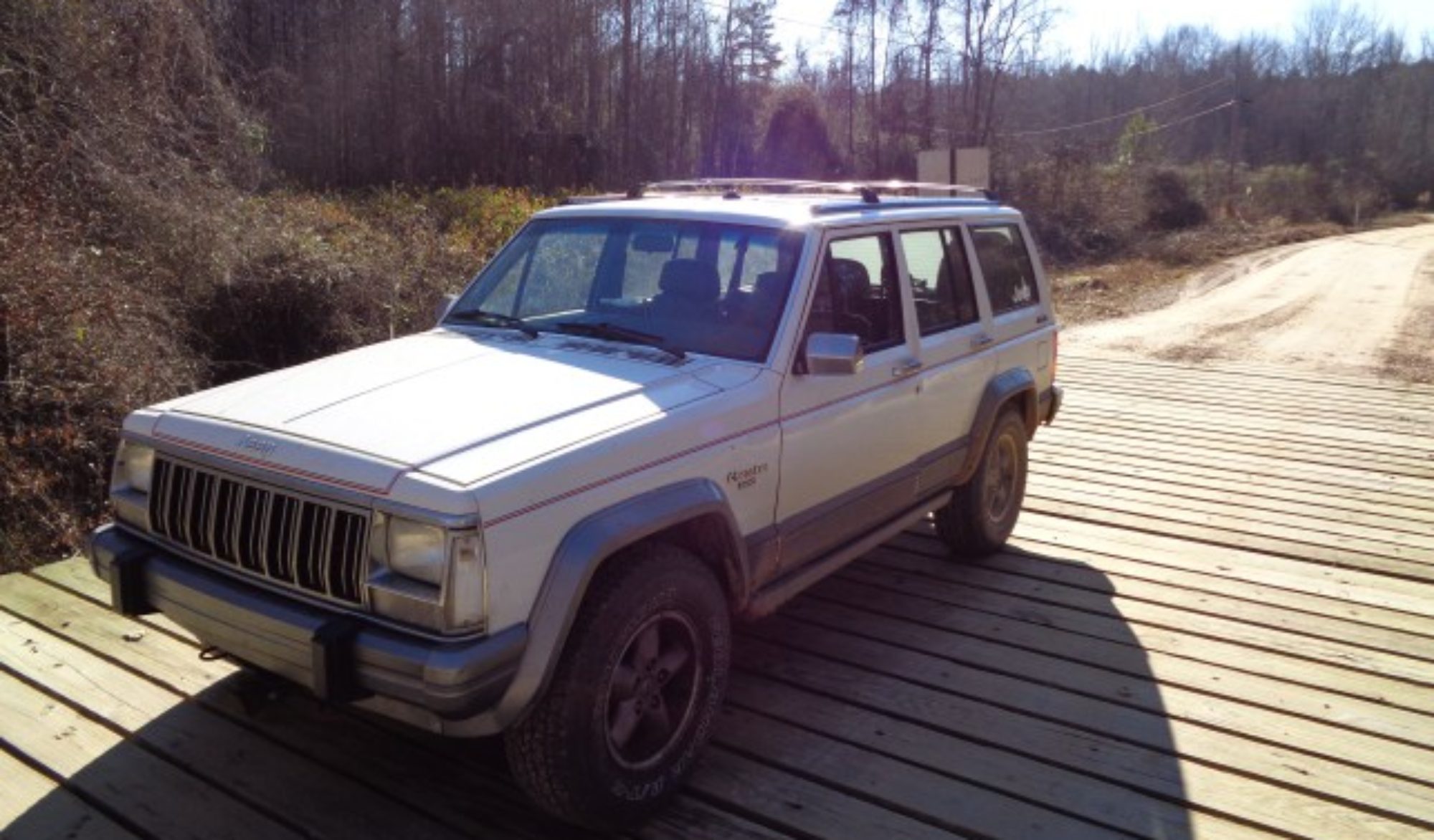
How to Replace the Water Pump in a Jeep Cherokee

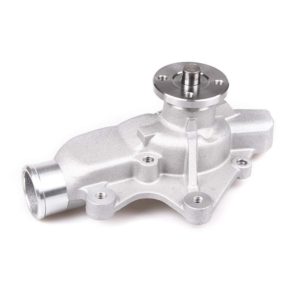
A leaking water pump can quickly damage the otherwise very reliable Jeep Cherokee Engine. The water pump can be changed by a home mechanic with some patience and ordinary hand tools.

When the Jeep Cherokee water pump seal fails, it will leak from the weep hole in the bottom of the pump. Since this hole is behind the pulley, it is often hard to see where the fluid is coming from. Often a water pump leak will be misdiagnosed as a leaking hose as the fluid runs down and drips off the bottom of the hose.

Begin by letting the Jeep cool. Remove the radiator cap and make sure there is no pressure in the system.

Remove the electric fan. It unbolts from the header at the top and the bottom sits in two tabs at the bottom of the radiator.
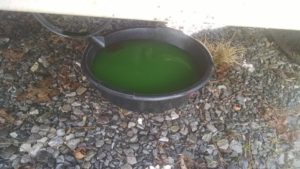
Place a pan under the Jeep to catch the anti freeze and remove the lower radiator hose. Let the system drain. Next, remove the heater hose from the tube attached to the water pump. Be careful with the tube as you will have to reuse it.

Break loose the four bolts that hold the pulley to the water pump but do not remove them. If the tension on the belt does not hold the pulley from turning, use a square section screwdriver between two bolts to hold it while breaking loose each bolt.

Remove the tension of the belt at the power steering pump. On the earlier versions, the whole power steering pump moves. On later ones, there is a separate adjuster pulley. Move the belt out of the way.

Finish removing the bolts and remove the pulley. Now you can access the four pump mounting bolts. These have half inch heads, not 13mm and one bolt is longer than the others.

Remove the two bolts that hold the power steering pump bracket. These are 15mm on some and 9/16 on others.

Now pry the pump away from the block. If this is an original water pump, there will be a pry tab on the top of the pump by the metal pipe. Many aftermarket pumps do not have this pry tab.

Twist the pump out from under the power steering pump bracket and carefully remove it from the Jeep. Place the pump in a vise and remove the metal pipe noting its orientation.

Put some thread sealer on the threads and install the pipe in the new water pump. Turn it until it is aligned the same as the old one was. It should stick straight back from the impeller.
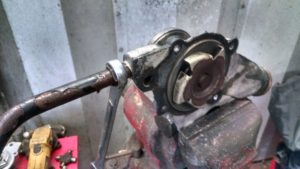
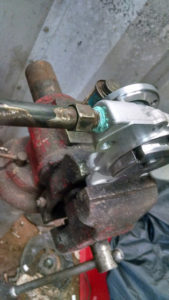
Use some sticky gasket sealer like permatex to hold the gasket on the water pump.

Clean the front surface of the block down to bare metal. This is probably the most time consuming part of the whole job. Use a scraper and some chemical gasket remover if needed. The block is cast iron, so you can be aggressive when scraping.

Twist the new pump into place under the power steering pump bracket and seat it into place. one of the bolts goes into the water jacket so just to be safe I like to put pipe dope on all the bolts to seal them.  Install the four mounting bolts that secure it to the block. Tighten them evenly.

Install the two bolts that hold the pump to the power steering bracket. Install the pulley using a screwdriver to hold the bolts while you tighten them. Make sure the pulley seats squarely on the flange and does not wobble when you spin it round.

Install the belt and set it to the proper tension. Reinstall the lower radiator hose and tighten the clamp. Leave the upper hose off for the moment.

Fill the system with a mixture of antifreeze and water appropriate for your climate. I use 50/50. Fill until the fluid comes out the heater hose or the metal line. Reinstall the hose and continue to fill the system. Most Jeeps hold about two gallons when the water pump is removed.

Check for leaks and then install the electric fan. Tilt it into place and engage the lower tabs. Then install the two bots at the top. Connect the control wire.

Start the engine and check the belt tension and check for leaks. Recheck the coolant level after the engine has been heat cycled.

11:11

11:1111:11

I seem to be noticing a lot of number patterns lately. As I talked about in a previous post, I see 12:34 a lot.

Just the other day I was working on a friends truck and the clock resets every time truck is started. When I went to shut it off it read 12:34.

But I am also seeing 11:11 often now as well. I also see other variations. Like this morning I work up form a dream and looked the clock. It said 4:44.

Look at my score from car town in the photo above. It is 1111.1.

Steve Pavlina has written about 11:11 and there is a facebook group that talks about things related to 11:11.

I am sure that 11:11 means different things to different people, but to me it seems to indicate that i am on the right path. I try to notice what I am thinking about and how I am feeling when I notice 11:11 on the clock or on some other counter. Usually I notice it when I am feeling happy and free. It seems that if I am anxious or worried I will see it before it gets there like 11:07 or something. If I am feeling sad or overwhelmed, I often miss it and see 11:13 or so.

Proverbs 11:11 Through the blessing of the upright a city is exalted,
but by the mouth of the wicked it is destroyed.

This reminds me that words are very powerful. If we speak blessings, our “cities” will be built up. However if we speak words of doom and gloom, our “cities” will be destroyed.

What are your thoughts on 11:11 and 12:34? Please share them in the comments below.

Note that this was written on 10/01/10

The Red Jeep Saga – Update

The Red Jeep Saga – Update

Scott has now taken possession of the Red Jeep Cherokee Limited. He reports that it is running well and he has scrapped plans to sell it and is now planning to keep it as his daily driver replacing his XJ Wagoneer.

He is in the process of sanding it down so he can repaint it. I think he is even planning an ambitious color change. A color change on a Cherokee requires a lot of attention to detain to get it right. My off road Jeep used to be purple and is now white but it is easy to see the purple interior when it is not covered in mud.

Changing the color on the red Jeep will require pulling all the door panels and painting the door jambs as well as the hatch and under hood areas. Lots of labor and masking tape will go into this project.

One last electrical glitch has been sorted out. The light in the clock would not work. After tracing the wiring, it turned out to simply be a bad bulb. Now the clock is visible again.

It is amazing that this Jeep that I thought would never run again now drives and runs better than some of the newer Cherokees in our collection.
[phpbay]jeep cherokee, 10[/phpbay]

Potty Training Little Jeepers

Potty Training Little Jeepers

On our last trip to Golden Mountain Off Road Park, I enjoyed seeing a buggy with a car seat strapped in the back. Kids love off roading and they love all the bouncing around at any age. But carrying a diaper bag and finding a place to change a dirty one can be pretty tough on the trail.

So you need to get that little Jeeper potty trained ASAP!

My JeepGirl friends have the solution. Janice developed this method while she was teaching at day care teaching two year olds. She studied all the various methods out there and came up with one that worked for her and her kids. Jennifer has taken the original idea and developed it into a web site where you can learn the tricks and use them on your own little Jeeper.

Using the method will take a bout a week of prep work and a weekend of adventure time with your little Jeeper. This is not anything that we as Jeepers and off road adventurers are not accustomed to.

Check out her site at http://pottytrainingsite.com. She will answer all your questions and even help coach you through the process if you need a little assistance. You can also see her Facebook page at http://www.facebook.com/pottytrainingsite. She is a fellow Jeeper and mother of three so she understands your Potty Training Problems and Frustrations better than anyone.

Check it out and get that little Jeeper out of diapers and into some big kid underwear this coming weekend. Save the diapers for drying out a distributor.

How to save gas in your Jeep

How to save gas in your Jeep

Jeeps are known more for their utility than for their fuel economy. The fact that we add large tires and lift them often adds to their thirst for fuel. However, there are a few simple things that you can do to save gas in your Jeep.

The single largest factor in how much gas your Jeep uses is how it is driven. Making slow starts and driving at a steady speed will do more to save gas in your Jeep than any thing else you can do.

Large off road tires can add rolling resistance to your Jeep causing it to use more gas. Lower air pressure that makes them get more traction off road also causes them to be more resistant to rolling on pavement. Bringing tires back to full pressure when driving on the road will help save gas. Also, having a set of street tires can help save gas and reduce wear on your off road tires.

Having the right gear ratio will also keep your engine in the proper operating range for better fuel economy. As you go up in tire diameter, you also need to go up in gears to match. This will keep your engine operating in the proper RPM range for optimum efficiency.

Another simple way to save gas is to reduce the stuff you carry around. Stronger bumpers, skid plates and winches all add weight and require more fuel to carry around. Any extra gear that can be removed and stowed between trips can help save gas. So look at leaving the High Lift and other heavy items at home.

Low restriction air filter systems and low restriction exhaust can also help save gas. Replacing the stock manifold with a header can add a small amount of engine efficiency. The stock system is very efficient and only small improvements can be expected. However, if the exhaust system is damaged, it may be adding fuel wasting restrictions. Dirty air filters and damaged air intake plenums can also reduce economy.

External accessories such as roof racks and wider fender flares will add aerodynamic drag to your Jeep. Keeping the exterior sleek will help save gas.

A well lubricated vehicle will also have less drag and use less gas. Save gas by adding friction reducing oil additives to the engine at every oil change. Using a lighter weight oil can also help save gas. Check the owner’s manual for the proper weight of oil for your Jeep’s engine. I have had good results for adding Market America’s Friction Free 3000 to each oil change.

Keeping the engine’s ignition system in top shape will also help save gas. Fresh spark plugs and wires will ensure that every ignition cycle results in a complete burn. I use the Champion RC9YC plug gapped a bit wider than stock to increase gas mileage on my Jeeps. A high energy ignition system like a MSD or Jacobs will be helpful on older Jeeps but less improvement will be seen on modern engines that have high energy systems stock. When changing the plug wires, it is a good idea to change the distributor cap and rotor to complete the renewing of the electrical system.

There are a few sensors that can reduce fuel economy in the engine if they malfunction. The most important is the oxygen sensor. If this sensor is damaged or contaminated, the computer may not inject the proper mixture of fuel. Replacing the oxygen sensor at the specified intervals may help you save gas. I have also found that the engine temperature sensor needs to provide correct information to he computer for optimum fuel economy. If you have a Cherokee and the electric fan is not coming on as expected, this sensor may be at fault. Replacing it will also help you save gas.

Several fuel additives have been promoted as ways to save gas. I have tried adding acetone and other chemicals but I have not seen any improvement in economy. However, occasionally adding SeaFoam to the fuel seems to help keep the injectors clean and helps with engine drivability with in turn helps save gas. I have also seen some benefit to using Market America’s fuel enhancer. The MA fuel enhancer also helps keep the fuel level sending unit clean so that it correctly indicates the level in the tank. This sensor tends to pick up sulfates form the fuel causing it to not read correctly. The MA fuel enhancer seems to reduce this build up.

One last note on fuel, fuel with ethanol will increase fuel consumption. I have seen as much as 10% gas saving by using gasoline without ethanol added. In addition I have found that fuel with ethanol tends to cause the idle air control valve to stick. If possible, avoid fuel that has had ethanol added.

Water to Gas

[phpbay]jeep gas, 10[/phpbay]