Dana 35 Yoke upgrade

Dana 35 Yoke upgrade

The modern Dana 35 holds the drive shaft with straps and bolts. The older Jeeps used U bolts to hold the drive shaft in place. The only difference in the yokes is that the newer one is tapped for threads to hold the bolts instead of being drilled for the larger U bolts.

This week I was reinstalling the straps on my rear drive shaft and stripped the threads on one of the bolts. Rather than try to repair the threads, I elected to retrofit the older U bolts to my yoke.

I used the U joint kit from Crown Automotive (A490K). This kit comes with two U bolts and four nuts and lock washers. They appeared to be over bent just a bit and I had to spread the legs to get them parallel. Otherwise the quality was fine.

I began by drilling 5/16 holes where the bolt holes were. These holes were a bit too tight for the U bolts so I used an 11/32 drill instead. The bolts fit fine in these holes. The casting of the yoke was easy to drill. I used water form a spray bottle to keep the bit cool.

I reinstalled the drive shaft and tightened the U bolts for a nice snug fit. The whole job took about 30 minutes.

If you don’t want to drill your yoke or if it is broken, you can get the whole kit including the yoke, a new seal and U bolts from Crown – part number D35-YOKE-UBK.

I will be modifying the front later using kit D3044-Yoke-UBK because there is not enough room for the nuts on the back of the stock yoke.

Machine Tool Safety

As I look at the scar on my left index finger, I am reminded of how fast a machine tool can cause an injury. I was a teenager working in my grandfather’s machine shop when it happened. I was using the large drill press to counter bore holes in the cutting edge of a bulldozer blade.

The drill press was very old and was definitely not built with safe operation in mind. I am not sure why, but the procedure involved sliding the heavy plate into position under the drill bit while the bit was still turning slowly in the chuck. I was wearing gloves to protect my tender hands from the sharp edge of the blade. The bit caught my glove, and although it was turning slowly, it began to wrap my finger around the bit all too quickly.

I was able to hit the power switch but the drill continued to coast until my whole arm was wrapped around the spindle. I reluctantly called to my grandfather for assistance. He manually turned the drill backwards as I unwrapped myself from the machine.

I was very lucky to have escaped with just a cut on my finger. I quick bandage and I was back to work; this time without gloves.

Machine tools can be very unforgiving when body parts are caught on or in them. The nature of the work also brings hands and fingers dangerously close to the rotating parts. It is easy to get accustomed to the proximity and get caught.

Gloves and loose clothing can easily get caught. Neckties should not even get close to the machines.

Procedures need to be developed to minimize exposure to the hazards. Making sure the rotating parts have stopped before relocating the work or taking measurements is one good place to start. I have seen many experienced machinist take caliper readings while parts are being cut in a lathe. Such practices endanger the worker and the equipment.

Guards are often a huge annoyance to machinists. However, if the guards are constructed of clear materials and made to easily open and close, they can add safety without interfering with the work to be done.

When developing procedures and procuring safety equipment, it is important to work closely with the machinists to make sure that the safety equipment does not interfere with the work. Otherwise, the safeties will be bypassed and procedures overlooked when supervision is not around.

Machine tools are a part of most modern workplaces. They can be used safely and effectively if proper precautions are taken.

Noisy water pump XJ

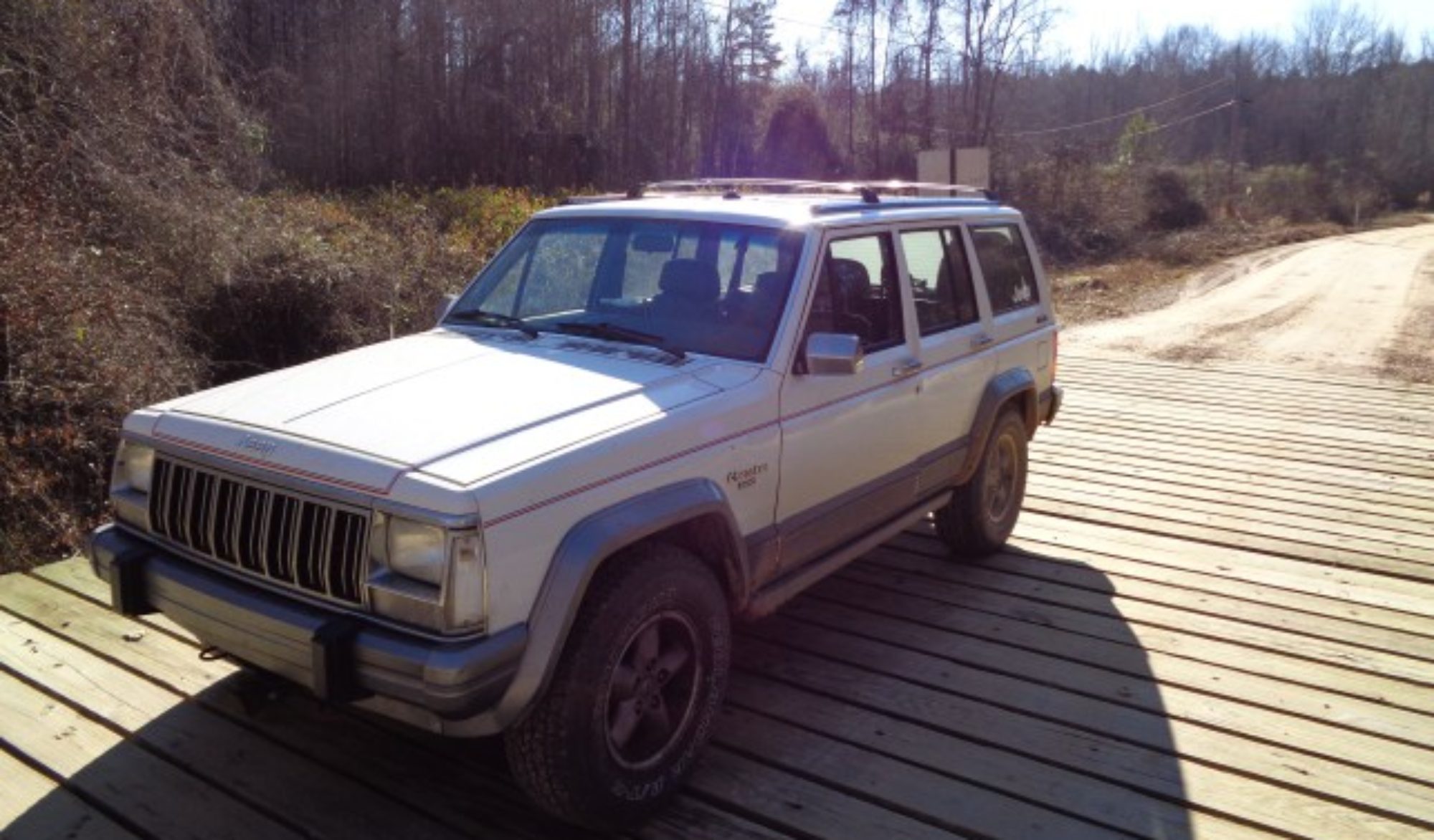
I have been hearing a rattle in my 91 Jeep Cherokee for a while now. I thought it was in the exhaust at first. But as it got louder, it was clear it was coming from the front of the engine.

I pulled off the idler pulley but the bearings in it were fine. I replaced it and reset the belt tension. The noise as defiantly coming from the front of the engine.

I got my mechanics stethoscope and began listening. The noise seemed to be the loudest at the water pump. I have never had a water pump bearing fail with out it leaking first. But that sure seemed to be the case this time.

I tried to ignore it for a day but the noise just got worse. I stopped by Autozone and verified that I had a warranty on this part that I had replaced in 2007 according to their record. I picked up a new pump and some antifreeze.

I was still skeptical but when I removed the belt and turned the pump by hand I could feel the bad bearing. I removed the pump using the procedure I have practiced way to many times.

I put the old pump in the vise and the noise was very clear when the pump was rotated.

I installed the new water pump and refilled the radiator. I found leaving the heater hose off the water pump allowed the air to bleed quickly.

Once I started it up it ran nice an quiet. The only casualty was that I broke by fan shroud while moving it around to get to one of the bolts. I will have to fix that before summer.

I took the old water pump back to Autozone this morning and got my money back. It was a very simple exchange. They had all the info in their computer.

If you want to get a 4% rebate on purchases from Autozone, use this link to buy online and pick up at the store. http://tinyurl.com/6fpp7se

1979 Jeep Wagoneer

1979 Jeep Wagoneer

I am working on a Jeep Wagoneer. It was delivered to the shop Saturday. It arrived minus the front drive shaft which looks like it broke and damaged the transmission pan on the way out.

The Jeep has the Borg Warner Quadratrac transmission so it won’t move unless both axles have traction. There is an emergency override that is supposed to lock the center differential but switching the switch in the glove box has had no effect on the transfer case. I suspect vacuum lines are loose or broken.

I got the missing parts and reassembled the drive shaft last night. I was hoping to be able to drive it into the shop. Well after a lot of effort to get the drive shaft in place with the truck on the ground in front of my shop, I found that the truck still won’t move. It looks like the damage to the transmission pan has caused it to loose all the fluid.

I guess I will have to drag it in to the shop and remove the pan to repair the leak. The engine runs rough when it revs. Maybe bad gas or maybe a clogged filter.

UPDATE: I put the Jeep on the lift last night to look at the transmission leak. There was no fluid it he transmission so even with the front drive shaft installed and the engine running, the Jeep would not move. I used my XJ to tow it in front of the barn door and then let it roll into the stall.

It took me a while to find all the cross member bolts and get ti out of the way to see the damage. It looked like on corner of the pan was simply bent down. However when I dropped the pan, I noticed that part of the sealing flange of the transmission is missing. The drive shaft did quite a bit of damage on its way out. I was able to straighten the pan, but I am still considering options on how to make it seal.

UPDATE: The Wagoneer was running well and the transmission repair was holding so I took it back home. The owners seemed happy to be able to drive it for the first time since they bought it.

Dealing With a Defiant Child

I have been learning about dealing with a defiant child from Caleb. He is a smart boy who is very insistent about having things done his way. It does not matter if his way is inconvenient or even impossible; he insists that things be done in his certain way.

For example, he cannot drink his tea if the glass is too full or not full enough. He will simply go thirsty and complain if his glass is not filled to exactly the arbitrary mark he has set. Making the situation even more difficult for those around him is that he rarely communicates this need before the drink is poured. His explanation at that “you should have known.”

He has absolutely no respect for any authority. His own desires are more important than any rules that are placed on him. He has no trouble making friends because he is outgoing and outspoken, but he has trouble keeping these friends because he is absolutely insistent on having every thing done his way. He is a terror to teachers and church workers who have him in class because he refuses to follow any rules other than his own.

He has been kicked out of schools and other social groups because of his unsociable behavior. Even his own father will have nothing to do with him due to his defiance and overall disruptive behavior.

He has been to a variety of doctors and social therapists and given several acronyms as to what is wrong with him. However none has yet developed a plan of how to deal with him.

Only one teacher has been able to deal with him and even she has days when she can’t handle him. She is a Sunday school teacher at a Unity Church. She accepts him just the way he is and practices non judgment. He responds well to her loving acceptance. However even she cannot get him to comply with the rules that the other children easily follow.

I have noticed what seems to be a flow in the process used by most people who try to deal with Caleb. They try to change him. He is very determined in his way that he will not be changed and soon there is an impasse. Those who try to accept him as he is and try to find ways to work with him seem to have more success in getting him to conform. However, he will always find ways to exert himself and continue to demonstrate his ability to control a situation.

If he finds himself in a situation where he has lost control and he is forced to submit to some authority that has temporarily overpowered him, he will shut down and hide. He often carries a blanket with him even on the hottest day so that he can cover his head and face if he encounters a loosing situation. If he can’t use his blanket, he will remove his shirt and cover his face. He will become violent if forced to interact when he is trying to hide from the situation.

He can express love and affection at times. For example, he recently shared his lunch money with a girl in his class who did not have enough. He loves to share snacks with the neighborhood children. But he will not share his toys. He will however leave them scattered around when he is done playing with them.

He picks who he is affectionate to. He is not influenced by the opinions of others. He sees no duty to show love and affection to even his mother. He is not motivated by a desire to please others.

He shows some signs of autism in that he does not recognize social cues. However it may be that he recognizes them yet fails to take social cues into consideration when choosing his actions.

When dealing with a defiant child like Caleb one is faced with two choices: engage in a battle of wills to see who is stronger or accept him for how he is and adjust to compensate.

Deep down all of us have the same desires as Caleb. We want things to go our way. We want to choose our own actions regardless of how others feel. We want to hide from authority when we are not allowed to do what we want to do. However most of us have decided that the benefits of getting along in society out weight our desire to express ourselves freely. By looking at how we are like a defiant child rather than how we are different helps in learning how to deal with one.

When we try to accept him for who he is and try to adjust our own behavior to compensate, we will have more success. However it is very difficult for most people to be able to set aside their own ego long enough to see that letting him have his way briefly will go along way toward achieving mutual goals. Setting clear rules with tangible consequences in advance seem to work very well with Caleb. However, consistent follow through is required as Caleb will test to see if the rules are consistent.

Overall, he responds well to people who accept him and are willing to work within his self imposed rule system. However he will tell you that he does not like rules. He means that he does not like other people imposing rules on him. By looking for ways to work together and avoiding unnecessary confrontations, the defiant child can be guided toward mutual goals.