Warped Brake Rotors on Jeeps and How to Prevent Them

Warped Brake Rotors on Jeeps and How to Prevent Them

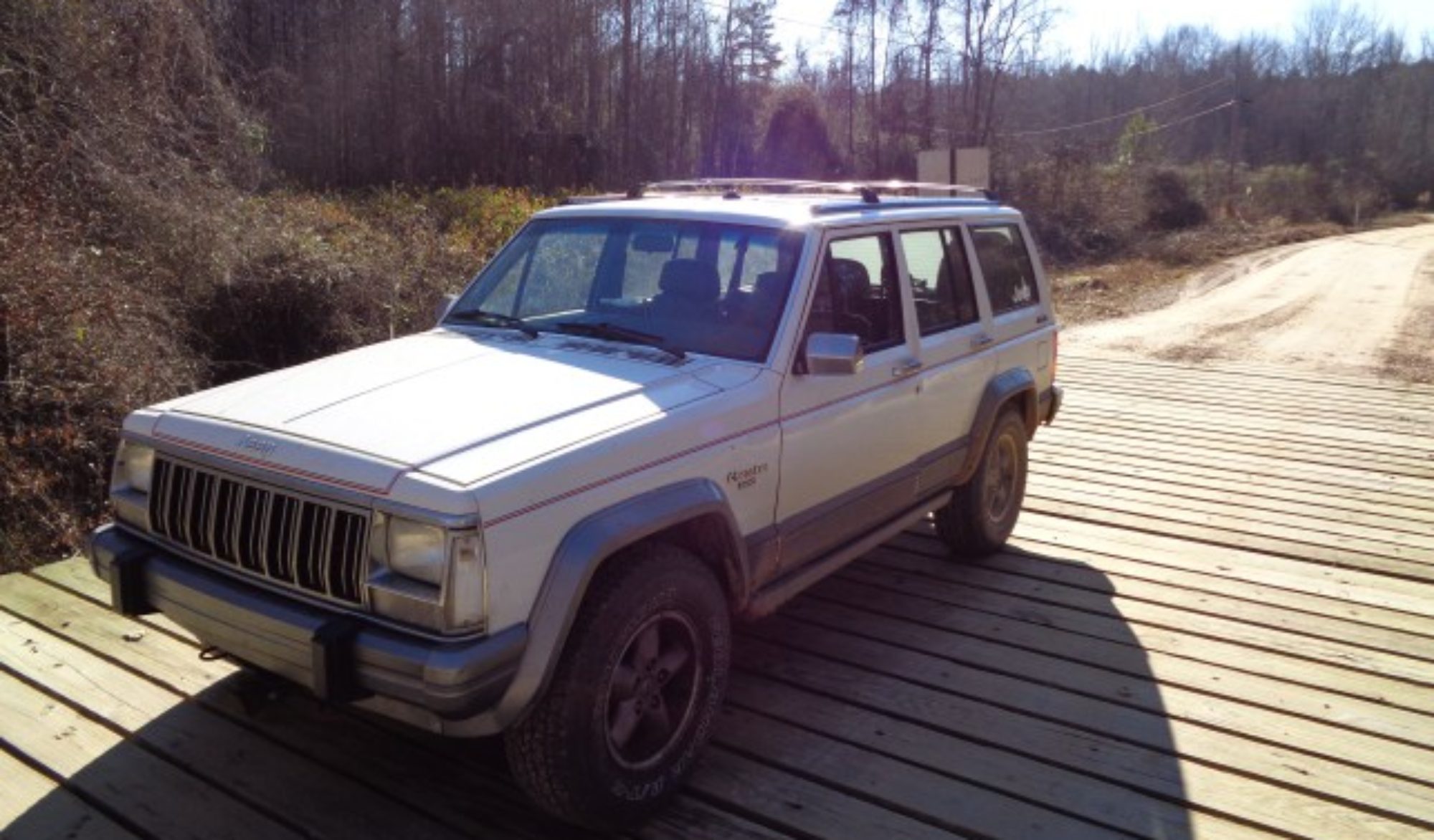
When I picked up my new brake rotors for my Jeep the guy at the parts counter advised me to carefully clean the brake rotors of oils including oil from my fingers to prevent warping. This was new to me and got me thinking about warped brake rotors and reminded me that I have not had to deal with a warped rotor in a long time.

The first thing I learned years ago was that the pulsing sensation we called a warped brake rotor is not actually warping. You can put a dial indicator on the face of the rotor and spin it around and it will read very little run out when it is making a pounding sound when the brakes are applied. You can measure it all the way around and you will find very little difference in thickness either.

The real cause of the shudder is a chemical change in the metal of the surface of the rotor. You can sometimes see it but most of the time you can’t. Turning the rotor cuts off that surface layer making the rotor run smooth again adding to the warping myth.

The rotor surface chemically interacts with the brake pads under the heat of braking. Most of this interaction occurs during the bedding in process of the brake pads. Many high performance and racing pads have a critical bedding in process to establish the correct chemical bonding between the two materials. Usually this involves making controlled braking maneuvers at predetermined speeds to generate the heat needed for the reaction to take place. It is important not to come to a complete stop during the process so that the interface layer is kept consistent around the rotor face.

This leads to why rotors “warp” and how to avoid it. The interface layer is constantly maintained as the rotor face and the brake pad material wears away. A new layer is constantly formed with each use of the brakes.

If you come to a complete stop with the brakes hot, the reaction will continue under the pads where the heat cannot dissipate. If it is held there too long, it will create a bond that is a bit stronger or weaker than the area next to it on the rotor. As the rotor develops these uneven spots where the coefficient of friction is grater that the surrounding rotor face, the brakes will give the characteristic chatter that we call a warped rotor. The pulsing in the pedal will feel like the rotor is pushing the pads away from the surface.

I tried a lot of things before I finally got away from “warped” rotors. I tried the expensive rotors. I tried the cross drilled and slotted rotors. I tried various pad materials.

The thing that I found that helps more than anything is a simple driving technique. Some people call it the Limousine stop. I call it a creeping stop. If I suspect that my brakes are hot when coming to a stop, I will aim to stop a bit short and then just before the Jeep stops and is ready to rock back, I let off the brakes and let it creep forward about a half turn of the wheel. If I have to stay stopped like at traffic light, I will creep forward again another quarter turn of the wheel to help even out the heat buildup in the rotor.

There are times where it may not be possible to make such a stop. For example in an emergency or if you have to spot unexpectedly. You may also have to hold the brake longer than you wish thereby creating a hot spot. If this occurs, I repeat the performance pad bed in process and create a new interface layer. Depending on how bad the hot spot is, it may take several repetitions of heat cycling the pads to get them smooth again.

Since I have made this style of stop a habit, I have not had any more trouble with warped brake rotors. I can’t remember the last time I replaced rotor on one of my Jeeps due to chatter.

Jeep Cherokee Front Brakes

Jeep Cherokee Front Brakes

This week I once again replaced the front brake pads and rotors on my Jeep Cherokee. I managed to catch them this time before the lining of the pads wore down to the metal. However, I found I still needed to replace the rotors because they had worn. There was actually a lip at the outer edge that made removing the calipers difficult.

I considered having the rotors turned. However, since it costs $16 to turn the at the machine shop and it takes two trips to town to drop them off and them pick them up later, I simply elected to buy new ones for $24 each.

I lifted the Jeep and removed a wheel. I then removed the two retaining bolts that hold the caliper to the knuckle. I had to use a pry bar to separate the pads slightly to get the caliper to come off over the lip in the rotor.

Once the caliper was off, I pried off the outer brake pad. I then used a C clamp to press the piston in before removing the inner pad from the piston. I then put new Duralast Gold brake pads that I got as free replacements at Autozone. I like the stopping power and feel of these pads and I really like the way my local store handles the warranty on the pads. I just swap the worn ones for new ones.

I then cleaned up the protective oil form the new rotor and set it in place. The guy at the parts counter had warned me that if I touched the rotor after cleaning the oil from my hands might cause it to warp. I have never experienced this problem but I heeded his advice anyway and cleaned the rotor again after it was in place on the hub.

I inspected the slide pins and mounting hardware. It all seemed OK, so I slipped the caliper into place over the new rotor. I tightened the two mounting bolts and put he wheel back in place.

I repeated the procedure on the other side. However on the second side, I pried the pads apart before loosening the caliper bolts as it made it easier to pry on the caliper. I don’t think I have ever had rotors wear quite like this before.

With the wheels back on and the truck lowered back to the ground, I pumped the pedal a few times to move the pistons out to contact the rotor before moving the Jeep. I made sure not to press the pedal further than normal while doing this to reduce the chance of damaging the master cylinder seals on trash that may have accumulated in the end of the bore.

The Duralast pads do not require any special bedding in process. I just make sure I don’t stop completely while they are hot for the first few miles. If I do have to come to a complete stop with them warm, I use a creeping motion to make sure that the heat is dissipated throughout the rotor rather than concentrating it all in one place. After ten to twelve stops, I could feel that the pads were nicely bedded in.

Books about dogs

Books about dogs

I read Cesar Millan’s Be the Pack Leader with great interest. My dog and I have a special bond and always want to learn more about dog psychology. This book helped me understand more about Smash’s need to have a strong leader. It also helped me understand Smash’s desire to be first on the trail when we are hiking and how he needs to have a purpose in life to feel fulfilled.

Before I read Cesar’s book, I never realized the inbred need to have a purpose that dogs have. I know I must have a definite purpose in order to feel good about my self, but I never thought about Smash needing one. I thought he was content just to lie around and eat between walks to the creek.

I began helping Smash to find his definite purpose. I noticed that he is very loving and affectionate with me, my friends and family. He strikes and aggressive pose toward strangers however. I realized that he has a natural tendency toward being a guard dog. I now tell him every night as I go to bed that he is to be on guard dog duty. He seems to really like having a job. I can also tell him as I leave the house to be a good guard dog and he instantly wags his tails and prances around proudly. If I neglect to tell him to be on guard dog duties, he will whine and try to go jump in the truck with me.

I have also found that if he barks at night, he will only get louder if I try to ignore him. If I go outside and compliment him on his good guard dog barking, He will prance around proudly before settling down with very little more barking.

I think Smash is a pretty well-adjusted dog. He seems happy living he rural life where he is free to run and explore. But he really does seem to like having a job. I would not have thought of that if I had not read Cesar’s book.

Recently I read Jack London’s Call of the Wild. I was sure I had read it before but if I had I am sure I would have remembered that the story is written from the dog’s point of view. The story is told by Buck the St Barnard German Shepard mix that is stolen from his comfy home and is sold to be a sled dog in Alaska. Buck’s travels, trial and tribulations are the story up until the point where he heeds the call of the wild and joins and eventually becomes the leader of a wolf pack.

In reading Call of the Wild, I began to wonder if Cesar got some of his ideas about dog behavior from this classic novel. In the story, Buck and the other sled dogs have a strong sense of duty. In some cases the dogs preferred to die in the sled traces rather than running free because they had such a strong sense of duty to their jobs.

The pecking order of dogs is explained from the dog’s point of view as well. Each dog had its place it the sled traces or in the wolf pack. If a dog stepped out of line or exceeded his boundaries, he was punished by the other dogs. If he needs helped, he as aided by the other dogs; but only if he had earned the help.

Bucks struggles to earn his leadership position are clearly document in the book. Buck earns the lead dog spot in a violent struggle and refuses to accept any other position once he earned it in the way of the dogs.

Another book by London – White Fang – documents more clearly the life of the wolf or the wild dog. While it never says so explicitly, the reader is lead to assume that the wolf in the story if a direct descendant of Buck. The struggles of her cub to learn the hard facts of life are the subject of the book. However, again London gives details of the way that the order if kept in the wolf pack and how each member has to earn his own place in the pack.

Reading these books has helped me learn more about Smash and how to relate to him. It has also helped me learn more about myself and how I can better elate to others around me. Cesar used the term “calmly assertive” when describing how to relate to a dog. I think this is a good way to approach many situations in life.

The metaphysicians teach us to form an image of our desired outcome in our minds before taking action. Being calmly assertive requires this image. By knowing what outcome you want and being assertive enough to make it happen cause many more positive outcomes than simply waiting for something good to happen. This way of thinking allows a person to take control of many situations that otherwise appear to be out of control.

In White Fang, London talks about how the wolf cub lives in the moment. He eats when there is meat and he goes hungry and goes hunting when there is no food. He does not stop to complain or worry, he just goes hunting.

I think we can learn a lot from dogs. The two most import lessons I see from these books is to live in the moment and have a definite purpose in life.

Remembering Y2K

Remembering Y2K

As we count down the days to the end of the Mayan calendar, I am thinking back to the last potential apocalypse. I still remember all the hoopla that surrounded the change from 1999 to 2000. It seems many people were convinced that all the computers in the world were going to crash and we would be returned to the dark ages because the computers would not know what year it was.

At first I thought the whole idea was just silly. I had no idea anyone had taken the issue seriously. This is until I got a directive from my company that I had to certify each and every item in the plant to be Y2K compliant. Even in my relatively small plant employing just under 200 people, there were a lot of individual items that had to be certified.

Considering the relative importance of the situation, I first assigned the task to my co-op engineer. As he began to collect the data, and report back his findings to me, I began to realize that there were in fact many people who took the issue very seriously. Some companies were paying big bucks to have their equipment certified.

In order to not take resources away from solving real problems, he and I developed a checklist to quickly verify that the equipment would not self destruct at the stroke of midnight on December 31, 1999.

Naturally our first step was to see if the device even had a clock and even knew or cared what day it was in the first place. We also developed a form letter to send to manufacturers to get a document that added credibility to our own assessment.

Once we realized that not only did our own upper management actually task the situation seriously, but other companies were also taking the issue seriously we began looking into selling our services outside the company. Unfortunately by the time we realized people would actually pay us to do the work, most of the big contracts had already be let to people faster on the uptake than us.

So we just resumed our own process of certifying all the equipment we had and depended on. Naturally most of the stuff we looked at did not have a clock and could quickly be eliminated from the high priority list.

For most things with a clock, it was a simple matter to set the clock to a date past 1/1/2000 and see what happened. Only after we had tested most things on our list did we get stern warning from corporate not to test in this manner unless specifically told to by the manufacturer. Luckily we had completed most of our testing by the time they told us to quit.

One system of particular interest was the phone system. It did have a very important function of keeping the date and time of each voice message. About a week after we had run our clock forward and back again with no ill effects noted we received a dire warning from the manufacturer not to perform such a test. The assured us that it would indeed self destruct.

Sensing this was a scheme to cause us to hire one of their technicians to test for us, I called our sales rep and told her we had already done the test and nothing bad had happened. She informed me we were very fortunate that it had not crashed but was sad that we did not need their tech to test it for us.

Once we had complied huge notebooks of documentation for the equipment in the plant, we began thinking of how to best present the data to management and the auditors. Yes, they actually had auditors to make sure we actually did the certifications and did them correctly.

We first ranked items by criticality. The highest priority items were placed in the first notebook. These were items that would have the most impact on the operation should they fail on 12/31/1999. Of course these were items that might shut down production or make the facility uninhabitable for some reason.

My co-op engineer examined the data and decided in order to quickly point out how thorough we had been we would sort the data in inverse alphabetical order. After all our most important piece of equipment was made by Zerand and there was no point making them flip through the huge notebook looking for the Z’s.

The most rewarding consequence of the inverse alpha sort pattern was that it put the Zurn company at the top of the list. Zurn made the automatic flushers for our toilets and of course we ranked these as critical since no one wants to inhabit a building if the flushers are not working. The added benefit was the not so subtle hint as to where we thought all the data we had worked months to gather really belonged.

The managers go the last laugh on us however as they required us to be on site at the stroke of midnight on 12/31/1999 just to make sure we had not missed anything. We got to ring in the new millennium with a group of engineers and maintenance workers rather than our families. But, they did give us written authorization to have an actual Champaign toast at midnight.

A Process Trouble Shooting Example

A Process Trouble Shooting Example

When I was at Westvaco, one of the important quality constraints on our product was the cut to print registration. By this, I mean the way the print lines up with the die cut of the package. Naturally some customers had tighter tolerances than others and one customer was particularly picky about theirs.

On these boxes, we found that some jobs ran just fine but on others we had a severe oscillation in the cut to print registration. We even had a term for it: “register rocking.” As the production run progressed, the cut would move from one limit to the other. And as the press speed increased, the registration would even jump to one side and then gradually creep to the other limit before it would jump back.

Our presses were fitted with the very best electronic registration systems available in the world. At the time, these were made by the Swiss firm Bobst. We had numerous conversations with Bobst engineers and had the electronics tested over and over.

Bobst always blamed the mechanical interface which was made by our press manufacturer. Of course Bobst also made presses and they wanted us to use theirs. However the Zerand press we had was much better suited to our style of printing and cutting.

We looked into every detail of the registration system. We considered the way the photo cell detected the registration marks. We looked for slop in the mechanical linkages. We looked for errors in the control program.

The intermittent nature of the problem made it even harder to trouble shoot. Several press runs would go fine and then one would pop up were the registration would not hold under any conditions.

Eventually we found that by carefully controlling the web tension we could stabilize the rock enough to make good product. However, the setting that worked went against common good printing practice and it was difficult to get the operators to run the press under those settings because they just seemed wrong.

Once we found that the odd pressures seemed to help, we began to look at why that would make a difference. Also, we began to recognize the types of jobs that gave trouble. We found that these jobs often paired older engravings with new cutting dies. We began to form a theory that maybe the two did not fit.

Due to the nature of the printing process and the tightness of the tolerances there was not way to directly measure the two. Both the die makers and the engraving manufactures assured us the parts were made to specification. Also, the printer operators assured us that there was no way that they could be wrong.

Despite a lack of cooperation from the press operators, we designed s few experiments to see if the die was in fact the wrong size for the print. What we discovered was the print was actually shrinking slightly as it went through the press. By the time it reached the cutter, the die was too big and most of the tolerance was used up in the error. We were actually getting the press to hold a much tighter tolerance than it was designed to achieve but most of that tolerance was used up in the error of fit.

The weird pressures we had been running had actually been stretching the paper slightly to help it fit. Due to the cost of the engraving and dies involved, it took a while to get new parts made and mostly the corrections were only made to new jobs. We also had to fight the people who simply could not see the complicated concept of how the parts did not fit.

Eventually we were able to get the engravers and die makers to change their algorithms for making the parts so that they actually fit by the time the product exited the printing press. Our press speeds went up about 20% once the operators no longer had to fight to keep the alignment that simply did not exist.