Replacing the Throttle Position sensor in a Jeep Cherokee

Replacing the Throttle Position sensor in a Jeep Cherokee

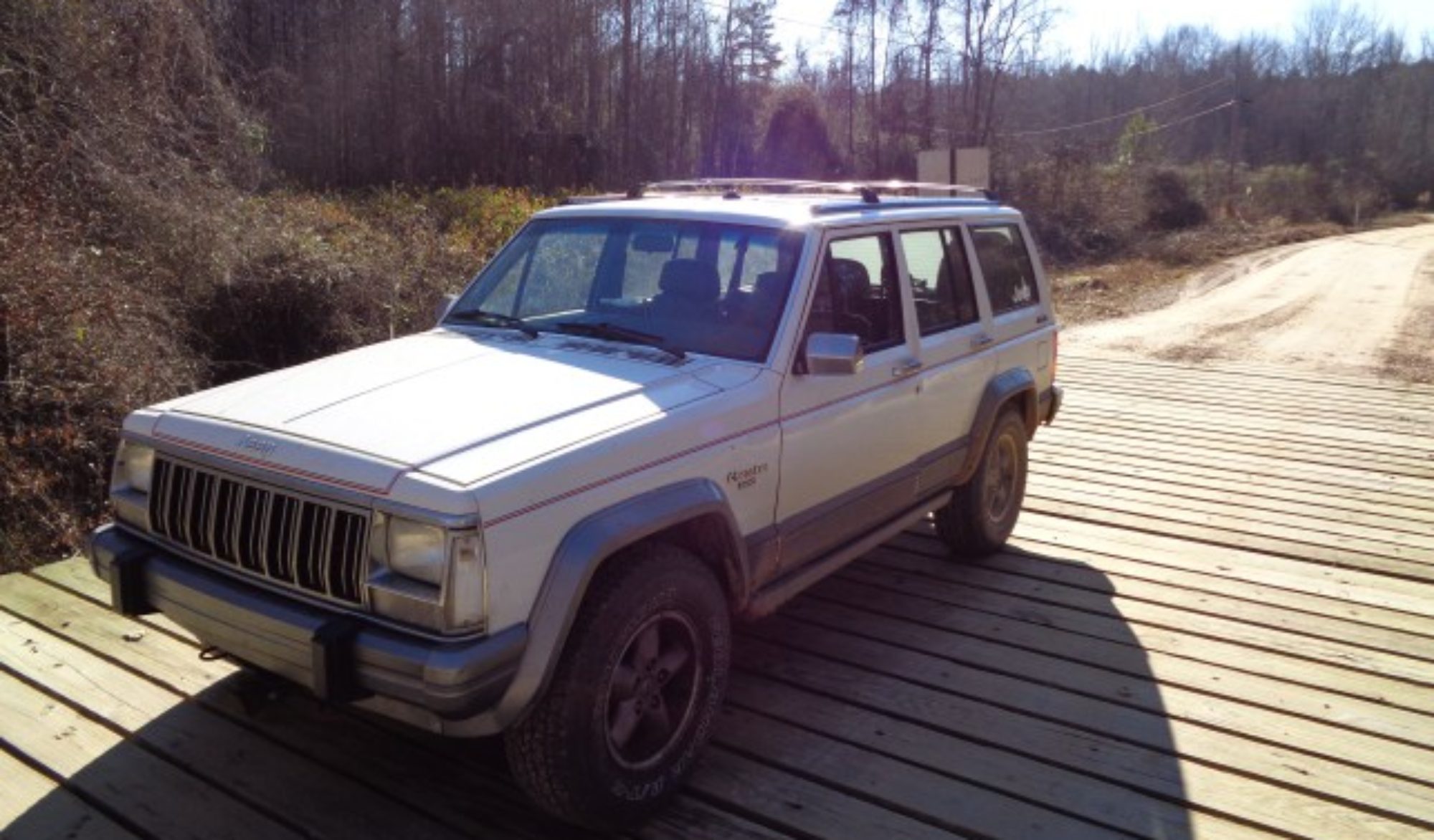
Jennifer’s 1992 Jeep Cherokee has been acting up lately. It has had a severe stumble at times but the stumble has been intermittent and unpredictable. I was guessing an ignition problem so I ordered a Crown Tune up Kit. However before the Kit arrived, her Jeep took a very severe stumbling fit one morning. During this particular event, the check engine light came on. Code 24 came up. That translates to trouble with the throttle position sensor.

I took her Jeep for a test drive and found that just off idle, the engine would nearly die unless you pressed the gas pedal down further. Coming back to idle it would do the same. I had to let off the gas completely to keep it for dieing but then it would idle fine. There seemed to be two trouble spots in the throttle position sensor and as long as you avoided those, the engine would run fine. The trouble was, these two spots were nearly impossible to avoid in city traffic.

I looked up the replacement sensor. Advance Auto had
a BWD Throttle Position Sensor
for under $40. I could sell one from Crown for $25 or so. However, I noticed that a 1996 ZJ had the same part number. I remember that there was a ZJ throttle body somewhere in my spare parts pile.

I had her drive her Jeep to my shop. She had some trouble to but was able to get it there. I found the manifold behind the barn and set about pulling the TPS off. It took a T20 torx. The bolts were slightly seized in the aluminum body so I used a pair of vise grips on the torx driver handle to get the extra leverage I needed to twist them out.

I looked at how the throttle tang engaged the sensor. There are two tangs inside the sensor that catch on the blade of the throttle shaft. Due to the preload of the spring in the sensor, you can’t just push it straight on. You ha to twist it a bit, slide it on the shaft and then rotate it to align the mounting holes. I was glad I had the spare throttle body to practice on before I tried it with the one on her Jeep.

I used the same vise grip trick to loosen the T20 bolts holding hers in place. I unclipped the wire and slipped the sensor off the shaft. I rotated the sensor slightly and then pressed it into place on the throttle body. I tightened the two bolts and then reattached the wire.

I started up the Jeep and checked for the stumble. I was very happy that it was gone. There was a high idle condition that lasted a minute or so but one it settled into the proper idle speed, the condition never repeated. I guess the computer was adjusting to the new TPS.

A road test showed that the stumble was completely gone and the Check Engine light did not return. I was very happy that the engine code came up when it did. Otherwise I would have been disappointed that the tune up did not cure the stumble. The tune up kit will still be installed but at a later date.

BWD Throttle Position Sensor - EC3297

Second Prototype Gas Tank Skid Plate

Second Prototype Gas Tank Skid Plate

I liked the skid plate I fabricated for Jennifer’s XJ so well that I decided to make one for my Jeep. I did however make a few changes in the design. I did not like the way I bolted hers in place by tapping into the thin metal frame rails. One of the bolts stripped out and had to be replaced with another one near by. I have bought rivet nuts to strengthen it next time it is taken off her Jeep.

For mine, I decided to fabricate a bolt strip to insert inside the frame rail. To make the strip, I first had to remove the rear bumper. This is easy on my off road Jeep due to the way the custom pipe bumper is made. I also took this opportunity to remove two broken off bolts in the bumper mounting surface.

The first one was accessible from behind the bolt hole so I simply clamped vise grips onto the end of the bolt and turned it out the back. I did have to use some heat and penetrating oil to get it to turn but one it did, it came right out the back.

The second bolt was at the top and I could not access it with vise grips. I could however spray penetrating oil on the exposed part. I first tried cutting a slot in the bolt and turning it with a screw driver. That did not work at all. Next I made a deeper slot and tried my impact driver. I was able to turn the bolt about half a turn before it stopped again. Even heating it cherry red did not help.

Next I took a nut and welded it to the broken off bolt. I used my flux core wire welder to make the weld. The bolt came out relatively easily with the nut welded to the top.

I measured for the two holes that were already in the frame rails. I then marked an approximate location for the third bolt. I drilled the holes in the angle used for the mounting bracket. I then made a strip of flat bar with the same hole spacing using angle as a jig. I then welded in two bolts into the holes that lined up with the two in the frame rail. I used a magnet to slide the strip into place and temporarily bolted the angle in place. I then drilled through the hole in the bracket into the frame rail. I then removed both parts and welded in the third bolt.

I repeated the procedure for the other side. I had to open the hole at the rear of the Jeep slightly to get the strip inside. I used a cut off wheel to make two vertical slits and then bent the metal out to open the hole enough to get the bolt strip in. Fishing it under the gas filler section was challenging but it worked.

With the mounting points fabricated, I used the template from the first skid plate to lay out the side pates. I extended them about a quarter of an inch to give a little extra clearance when installing the plate. The bottom plate ended up about a half inch wider. I am not sure how that happened. However, I like the extra clearance on the side of the tank.

Another change I decided to make was the exhaust hanger. Jennifer’s uses the exhaust hanger bolts as mounting bolts. However, these proved extremely difficult to install when mounting the skid plate. For mine I fabricated studs and welded them to the mounting angle. Now I can simply slip the hanger over the studs and install two nuts. I expect this to be much easier.

I currently have the sides and the bottom tack welded together. My next step is to remove the assembly from the Jeep and complete the welds. I picked up a new roll of wire for the welder today.

UPDATE: Last night I took it down and did the final welding. I finished off the spool of wire that came on my MIG so I had to learn how to change wire in the middle of the welding process. I ground down the edge and now it is ready to be sanded for paint.

Skid plate bolts

frame holes opened up

mounting bolts for skid plate

studs for the exhaust hanger

finished gas tank skid plate

UPDATE 2: I added a small lip at the front edge that adds a lot of strength to the plate. I also sanded it down and painted it black.

Exhaust hanger detail

Exhaust in place

Filler cover detail

Jeep Cherokee Thermostat Replacement

On the last few cold mornings, I noticed the heater in my Jeep Cherokee was not putting out heat like I wanted. I also noted that the temperature gauge was not reading as high as normal.

I knew that the thermostat must be opening too soon. The only cure is to swap it out.

I picked up a Stant Supersat at Advance Auto. I used the order online – pick up at the store option to save a couple of bucks.

My Jeep is equipped with a K&N air filter and intake tube so I don’t have an air box in the way any more. I loosened the power steering pump and moved the drive belt out of the way of the thermostat housing. I have done it without loosening the belt but it is much easier with out the belt in the way.

The later model XJs have the belt routed where it is not in the way. However, on an earlier XJ like my 91 the belt interferes with getting the bolts started back in the housing. I previously wrote about changing a thermostat on a 99 XJ.

I popped off the radiator and heater hose. I disconnected the temperature sender wire.

I then removed the two 1/2 inch head bolts and popped the housing off the block. I set up a pan under the Jeep to catch the antifreeze. I also laid out newspaper to soak up the splatters as anti freeze is very slippery on the floor.

I cleaned up the bolts and the housing using the wire wheel on my bench grinder. I then use a scraper and a scotch brite wheel in my drill to clean the block face.

I noticed that the new thermostat did not have a bleed hole in it, so I drilled a small hole in the flange. It is hard to bleed all the air out of a 4.0 if there is no hole in the thermostat. Most of the ones I have bought lately have a hole but this one did not. So, I made one.

Getting the new thermostat to stay in the block while setting the housing is always tricky. I knocked mine out the first time and only noticed it when the antifreeze started to run out as I was filling the system.

I put a dab of Permatex on the flange to get the thermostat to hang in place long enough for me to slip the thermostat housing in place over it. I used additional Permatex to make the gasket stick to the housing. I held the housing in place with one hand while I started the bolts with the other hand. I was able to get it all in correctly on the second try.

I tightened the bolts and left the hoses off until I filled the system. I then reattached the hoses and filled the radiator completely with anti freeze. I then put back the temperature sender wire.

I put the belt back on and started the engine. I checked for leaks and made sure the engine came up to the proper temperature. I let it cool and topped off the radiator with coolant. I enjoyed having a nice warm heater again this morning.

Stant Superstat Super Premium Thermostat, 195 Degrees Fahrenheit - 45209


Stant Superstat Super Premium Thermostat, 195 Degrees Fahrenheit – 45209

Jeep Cherokee Power Steering Hose Replacement

Jeep Cherokee Power Steering Hose Replacement

I have replaced several power steering hoses on various Jeep Cherokees. It has gotten to be a pretty straight forward job. See this previous post on how to replace a power steering hose.

Janice’s 1999 Cherokee had been emitting a puff of smoke each time she turned her XJ to full lock. Although there was little sign of a leak on the hose, our experience with the Green Jeep catching fire due to a power steering hose leak made me extra cautious.

I got a new hose and then pulled the electric fan and the air box to make room. I tried using the various 18mm wrenches I had to get the hose loose from the steering box. I have always been successful in the past using an open end wrench. However, this one refused to budge.

I picked up a set of crow foot flare nut wrenches from my local NAPA store. They have a great set of tools in a nice case for around $20. Unfortunately I forgot that the bottom is an 18mm and the top is a 5/8 inch. I bought only the SAE set. The store was closed for the holiday by the time I figured out I also need the metric set.

Jennifer rescued me by searching until she found a set at O’Reilly’s. It is still a nice set for about the same price as the NAPA set but does not have the nice case.

I used the 18 metric crow foot flare nut wrench to break loose the lower line. It took a lot of torque but it eventually broke free. Janice and Jennifer were able to finish taking it out using the 18mm stubby wrench.

I used the 5/8 crow foot to pop loose the upper hose. It was not nearly as tight. I showed them how to put on the O rings on each end of the hose and let them get the lines threaded into place. The lower one always seems to be difficult and takes some patience to get it started.

After the new line was installed, I had them add some fluid and jack up the front of the Jeep. They turned the wheel from lock to lock to bleed the air out of the line. After that, they started the engine and repeated the process.

Once most of the air was out, she turned the wheel to one of the locks and listened for the pressure relief to open. There was a noticeable change in sound as the last of the air purged.

I rechecked the level of fluid in the power steering reservoir and checked for leaks again. Now we all feel much safer driving the Jeep.


Powercraft Power Steering Pressure Hose – 80290

Powercraft Power Steering Pressure Hose - 80290

Fabricating a Gas Tank Skid Plate for a Jeep Cherokee

The fuel tank on Jennifer’s XJ has taken quite a beating from off road driving. In fact the fuel pump pickup is no longer the lowest point in the tank making the effective size of the tank much smaller than its original 20 gallons. She will need a new tank to cure this problem but in the mean time, I decided to fabricate a skid plate to prevent further damage and to be ready when she can get a replacement tank.

I began by making a mock up out of foam construction board. The pieces I had had once been a sales display. It provided several large sheets of ¼” poster board with a foam liner. The material is stiff, lightweight and easy to cut and draw on.

I looked at several skid plates commercially available and I did not like the way they mounted. I wanted something that attached to the unibody frame rails one either side of the tank. Of all the ones I looked at, only the Mopar plate mounted like that.

I began with two pieces of 3x3x1/4 angle. I cut them to extend from the front of the trailer hitch to the front of the tank. I shaped the upper flange to match the shape or the curved frame rail section. I drilled holes in the angle face and then made corresponding holes in the Jeep. I tapped the sheet metal for 5/16 bolts. I used the existing exhaust hanger bolts on the passenger side as well.

Using the template I made from foam, I cut two side plates form 3/16 scrap. These extend the angle down to level with the lowest point on the tank. They are angle d at the rear so that I could mount a plate angled up behind the gas tank to protect the rear of the tank and not take away departure angle. I ended the rear late below the trailer hitch cross bar.

I then welded the extensions to the vertical parts of the mounting angle. I bolted the side pate to the Jeep temporarily and confirmed the measurements of the two main plates. I put one large plate under the main part of the tank and second plate going up at an angle at the rear of the tank. The fabricated angle between the two plates adds a lot of strength.

I tack welded the bottom plate to the side plates. I then took the assembly down and finished welding the bottom to the sides. I then welded the back plate to the assembly. I made a series of short welds along the long seam to avoid warping the metal.

Once the welds were finished I ground the edges smooth and painted it black.

Putting the entire assembly back up took some help as it was now too heavy to balance on one hand. Jennifer assisted me by balancing it on the under lift stand. She also helped move the exhaust pie out of the way while I started the bolts. Only one of the 5/16 – 18 bolts stripped in the thin frame rail. The others tightened down well. I drilled and tapped a new hole to replace the one that stripped.

I plan to replace the tapped holes with nut rivets in the future if these do not hold. The skid plate is very sturdy and neatens up the appearance of the rear of the Jeep. I think I will have to make another one for my Jeep now.