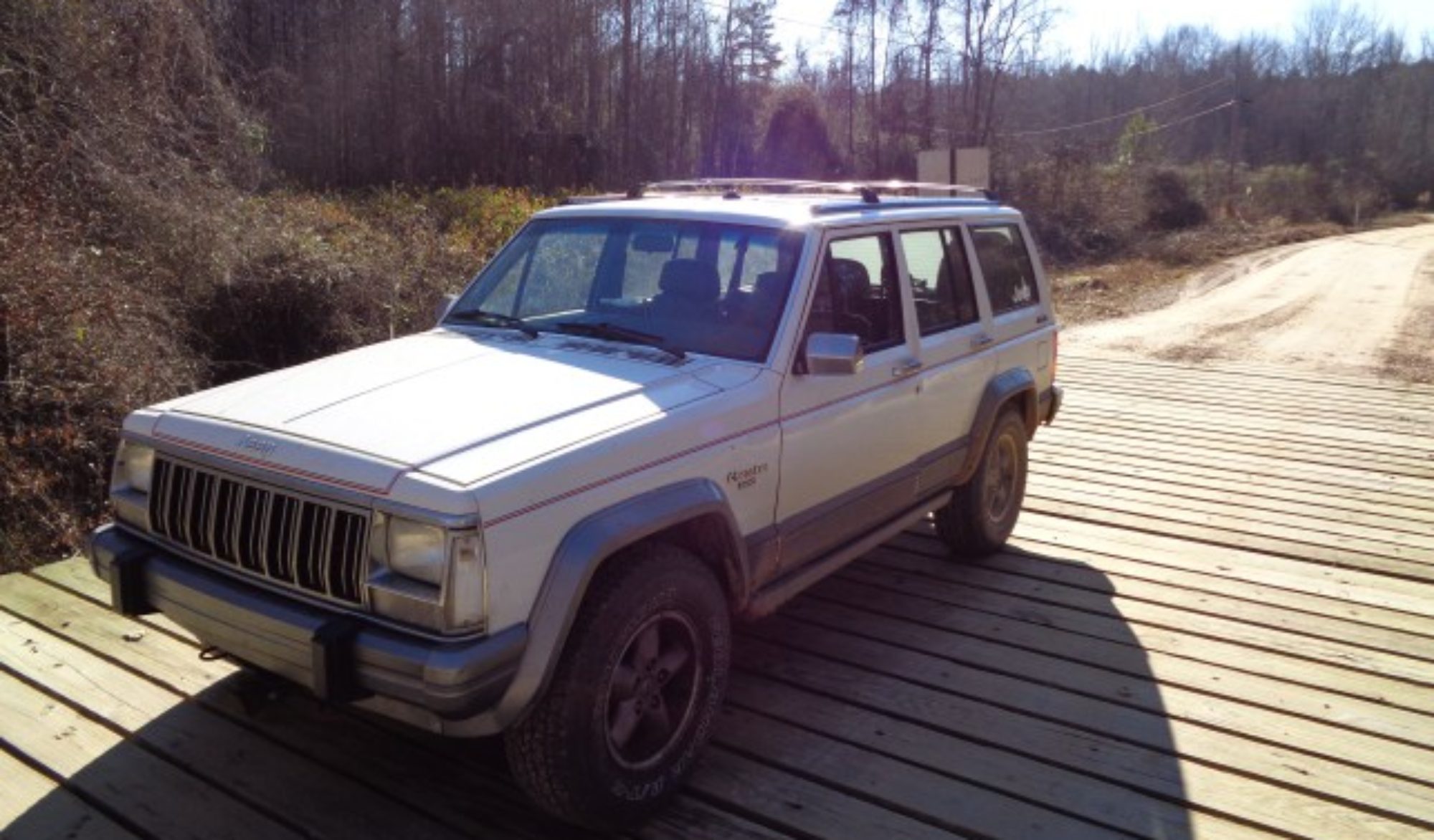
1999 Jeep Cherokee Alternator Replacement

1999 Jeep Cherokee Alternator Replacement

Our 1999 Jeep Cherokee has over 270000 miles on it and has recently been having some odd problems with voltage. On occasion, the volt meter would drop to 9 and the check gauges light would come on. Stopping the Jeep and restarting would normally clear it right up. I assumed it was a gauge issues and not really a voltage problem. Testing the battery with a VOM always showed it to be fully charged.

However, a couple of days ago while Janice was driving, the voltage dropped and stayed down. When she stopped, the Jeep would not restart. The battery was dead. Jennifer had to jump start her from her Jeep.

Later, while I was driving it, it died in traffic and I had to push it to the side of the road. I retrieved it on the trailer and took it to the shop. Testing showed the battery completely drained.

I put the charger on the battery and began pulling the alternator. Removing he alternator from the 99 was similar to the earlier models but with a couple of differences.

First, the field wiring connector is a plug in rather than bolt on. It took some force to release the clip but it pulled right out. The min lead connects just like the others with a 10mm nut on a stud. Be sure to disconnect the battery before messing with this nut.

Next, I collected my 15 mm socket and 9/16 socket knowing I would need both. Working from below, I removed the bottom bolt that passes through the alternator boss. I then loosened the 15mm bolt next to it. I then loosened the 9/16 nuts that bolt the bracket to the block. They only need to be loosed a turn or two not removed.

Then, I removed the long bolt that passed through the upper alternator mount. Both ends of this bolt require a 15mm. I found it easier to hold the bolt and turn the nut due to the fan being in the way. I found one position of the fan that allowed the bolt to come all the way out.

With the two bolts out and the bracket loose, I slid the alternator up to loosen the belt and then to the side to separate it from the brackets. Mine was stuck to the brackets with some corrosion so I had to use a pry bar to break it free. Once the alternator was free of the bracket, I twisted it to find just the right angle to bring it down past the frame rail and oil pan.

With the alternator out, I noticed some corrosion on the field wiring terminals. This may have been the cause of my intermittent troubles. However, I elected to replace the alternator anyway. It tested “good” on the AutoZone tester, but with its age, I decided to replace it anyway.

Installing the new alternator involved finding the right angle to slip it up past the bracket and lowering it back into place. It is possible to reinstall without adjusting the belt tension, but I chose to install a new belt at the same time as well.

I began by slipping the lower bolt in place. I then rotated the alternator to line up the upper bolt. Then, I found the right place to put the fan and slipped the upper bolt in. I tightened the upper and lower muting bolts then snugged up the reaming nuts and bolts that I had loosened but not removed.

I put the main wire back on and then plugged in the field wiring. I then put the battery cable back. I then threaded in the new belt and adjusted the tension.

The Jeep started right up and the voltage read correctly on the gauge. I test drive indicated everything was back to normal. We had experienced some belt squeal when the AC was first turned on but with the new belt, that was gone as well. After the test drive I checked the battery and it was at 13.7 just like it should be.

Jeep Cherokee Fuel Pump Relay

Jeep Cherokee Fuel Pump Relay

This morning when I started my Jeep it stumbled and stalled a few seconds after it cranked. When I tried to restart, I noticed I could no longer hear the fuel pump running.

I pulled the cover on the relay panel under the hood and used the paper clip I keep there to jump the relay. The pump ran and I could hear the regulator venting pressure. I put the relay back in place and tried to start the Jeep again.

The Jeep started but stalled again. Again I could not hear the fuel pump running. I opened the hood again and swapped the fuel pump relay and the aux fan relay. This time when I turned on the key, I heard the familiar buzzing of the fuel pump. I guess the relay made its last click this morning. I will pick up a replacement at Advance Auto later today.

Update: Autozone did not correctly list the relay and did not have the correct part at all. Advance had the right part for $13.

Catera Transmission revisited

Catera Transmission revisited

The Catera transmission I installed back in December failed suddenly for its owner recently. I towed the car back to the shop and pulled down the transmission.

I found the front pump seal blown completely out of the housing and up on the neck of the toque converter. It had pumped out all the fluid as well.

I had my suspicions about the replacement seal when I put it in. However I had been assured by the supplier that it would work fine. The proper seal has three bolts that hold it in. The replacement was simply a press fit. Apparently this transmission makes more pressure than most and just forced the seal right out.

After some research, I found the proper seal on ebay. It took a few days to get but after it arrived I was able to quickly put the car back together. Luckily I had saved the screws from the last time I had the car in the shop.

I refilled it with fluid and it seems good to go again. Hopefully this time it was last a while before it returns to the shop.

Seal popped out of housingProper seal on the left

seal

Jeep Tire Rotation

Jeep Tire Rotation
and some tips on handling lugs nuts.

Rotating the tires on a Jeep is essential to long tread life. And with the cost of off road tires, you want them to last as long as possible. You can usually see a different wear pattern develop on the outer edges of the tires due the differences in the forces acting on the front and rear tires. Ideally the rotation would occur before the pattern is visible, but I usually wait until I can see it.

There are several schools of thought on rotating tires. Rotating tires means moving the tires to a different position on the Jeep. For example, you may simply swap the front tires to the rear. This inline pattern is how I most often rotate the tires. Some people add a side to side swap at the same time so that the tires are not only on the opposite axle but also on the opposite side of the Jeep. A swap in the X pattern means the tires will now be spinning in the opposite direction on the road.

Most of my tire experience has been with sports car tires and many of them have directional tires. So, I have gotten in the habit of simply moving the front tires to the rear and keeping them on the same side when I do a tire rotation. Either way you choose, here are some ways to accomplish the task:

How you rotate the tires depends on the equipment you have to work with. Since I have a lift and air tools, I lift the Jeep remove the lugs with an air wrench and move them to the new positions. I sometimes make a trip across my balancer if I have been having any vibration issues.

If you are armed only with the Jeep jack and the stock lug wrench, you are in for a bit of extra work. First, loosen the lugs on the side you plan to swap first. Remove the spare from its mount and have it ready. Jack up one corner and remove the wheel. Replace it with the spare but only put on three lugs. Set it down and move to the other axle. Break the lugs loose and then jack up that corner. Install the first tire there and install all the lugs. Now return to the corner with the spare and replace it with the tire from the other axle. Install the lugs and lower the Jeep. Repeat the procedure on the other side. Be sure to properly tighten all the lugs nuts when you are done.

If you have a jack stand, you can use it instead of the spare tire to save some effort. If you have two jacks you can save even more time and energy.

When loosening the lugs, note that they can be very tight. I prefer to use an air impact wrench for loosening. If you use a ¾ inch socket on the factory lug nuts, be sure it fits properly and is a deep well socket. Using a shallow socket will damage the chrome cover on the lug nut and make it so that no socket will fit it properly. If the cover is damaged, replace the lug nut. If you are faced with trying to remove a lug that is missing the chrome cover, get a cover from another lug nut and slip it inside you socket. This will allow a ¾ socket to fit the damaged lug.

If you do not have compressed air, I have found the electric impact wrenches work very well also. Even some of the battery powered units have plenty of torque and battery life for a tire rotation. Avoid the cheap guns that attach to the car battery. They are useless for tire rotation.

If you do not have an impact wrench, a long handled ratchet or breaker bar with a ¾ inch deep well socket works well. Be prepared to stand on the wrench handle if they were last put on at a tire shop. I don’t like to use a 4 way wrench because most of them are not deep enough to engage the lug nut properly.

Also, while the wheel is off inspect the lug studs threads. If there are damaged either chase the threads with a die or replace the stud. If the lugs are damaged in any way replace them. I prefer to run 13/16 hex lugs on my Jeeps instead of the stock size. However, I have to always remember that the stock lug wrench will no longer fit when I travel.

When tightening the lugs nuts, I always use a torque wrench. I prefer to use the clicker type for lug nuts for two reasons. First, the beam type wrenches are too hard to read sideways. Second, I would rather have precision than accuracy in lugs nuts. In other words, I don’t care if they are 73 or 76 I just want them all the same. BTW, I set the wrench at 75 ft lbs for the lug nuts.

I use a torque wrench because not only have I had the misfortune to have a wheel come loose while driving, I have seen wheel hubs damaged by too much torque. Also, a respected mechanic friend of mine, Jim Alton says that improper torque can cause brake shudder on Jeeps.

Rotating the tires at each oil change will help keep up with the uneven wear. Also, while the front wheels are off, it is easier to lubricate ht various grease fittings in the front suspension.

Building a Rock Garden for my Jeeps

Building a Rock Garden for my Jeeps


Ever since I built my house in 1993, I have wanted some form of rock feature in the front yard. I started work on a water fall once but got discouraged by the cost and thought of constant upkeep.

Since I began using my Jeep off road instead of rally racing, I have wanted my own rock garden to test and play on. However, I have not been willing to invest money in buying rocks. Whoever coined the phrase “Dirt Cheap’ has obviously never bought dirt or rocks.

Here in east Tennessee there are usually rocks lurking just under the surface anywhere you dig. My property is no exception. There have been two large rocks lying beside my driveway that were removed when it was built.

Yesterday with some help from my neighbor and his tractor with a front bucket, I moved them into place to begin the rock garden. Moving them was a bit more difficult than I expected. I had expected him to simply scoop them up in the bucket and carry them up the drive way and drop them into place.

First of all the rocks turned out to be larger than I realized once they were separated form the dirt that partially covered them. That was a nice surprise in a way but not for the plan we had in place for moving them.

Plan B consisted of lifting a corner of the rock enough to get a log chain under it and dragging the rocks into place. Josh used his loader to lift a corner of the rock while I slipped in a wooden chock. We then used a shovel to help work the chain under and around the rock. He then used the 4wd tractor to drag the rock along the gravel driveway. It worked well to grade out the high center some at the same time.

We stacked the two rocks in a partially overlapping manner. The stack comes just to the rock rail on my Jeep when straddling it making it the perfect height for testing and posing for photos.

Next I will add some smaller rocks around the two large ones to make the entry and exit more interesting. I will also be on the look out for some larger rocks to add to the collection.